










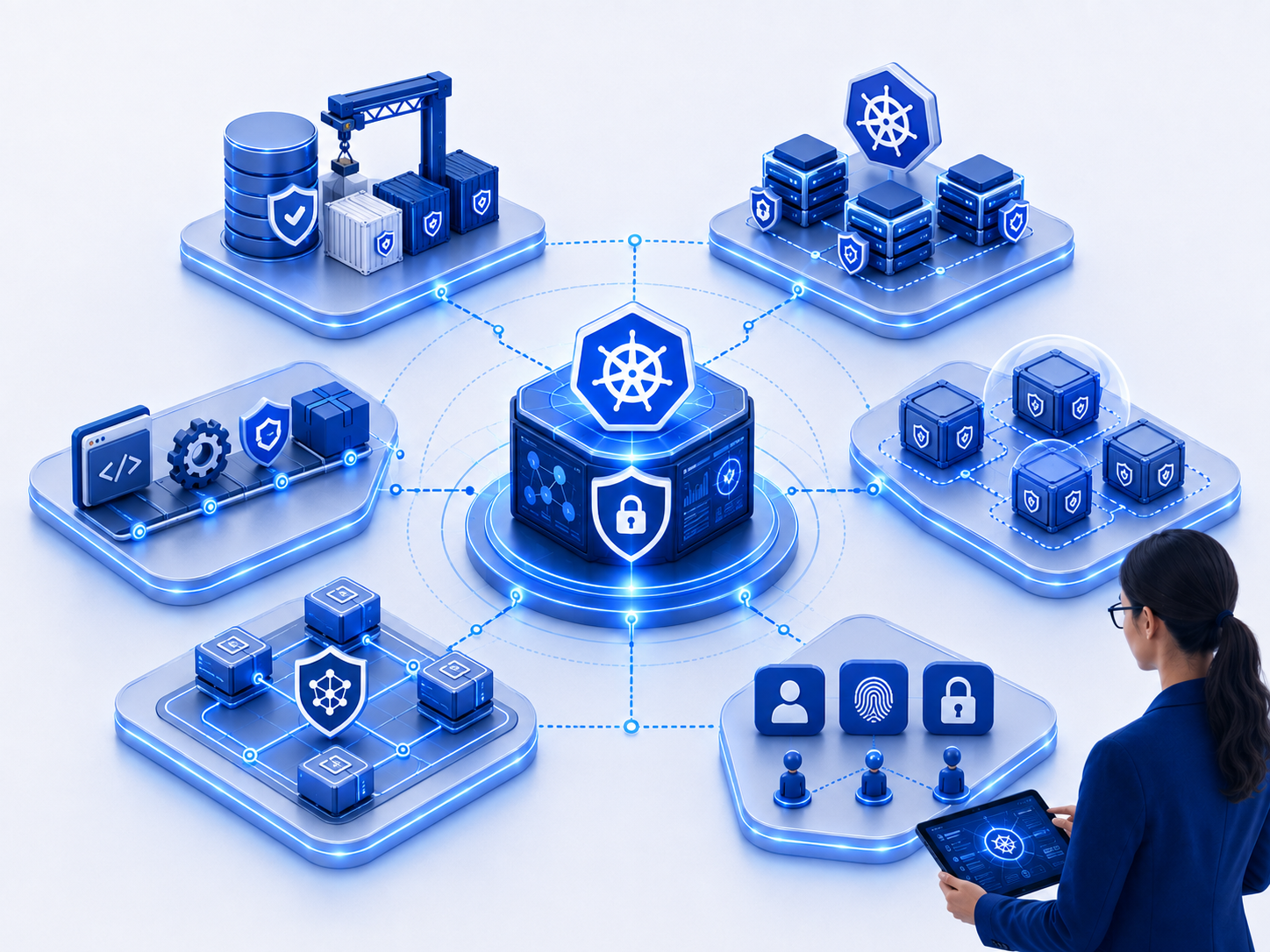
Designed to protect what matters
before threats strike.
Organizations increasingly depend on containers, Kubernetes, managed clusters, microservices, and cloud-native platforms to deliver critical applications. Vulnerable images, excessive permissions, insecure workloads, weak network controls, exposed secrets, and configuration drift can expand attack paths and increase operational risk.
CliffGuard’s Container & Kubernetes Security Services help organizations assess container images, harden Kubernetes clusters, strengthen workload controls, reduce privilege, secure runtime environments, and embed security throughout cloud-native delivery pipelines. As adoption scales, inconsistent controls across clusters and development teams can make security ownership, policy enforcement, and risk visibility difficult to maintain.
Container Security protects container images, registries, runtime environments, secrets, and software dependencies throughout the application lifecycle. NIST SP 800-190 specifically addresses security risks and recommendations for application container technologies.
Kubernetes Security protects clusters, workloads, identities, network paths, control-plane components, nodes, and configurations from unauthorized access, privilege escalation, and operational compromise.
CliffGuard combines image assessment, Kubernetes hardening, RBAC review, workload security, runtime validation, and DevSecOps integration to reduce cloud-native risk and strengthen enterprise resilience. Security must therefore extend from build pipelines and registries through deployment, admission, runtime, and ongoing operations across enterprise cloud environments.
☸️ Cluster Security Assessment – Review control planes, nodes, namespaces, configurations, policies, and administrative interfaces.
📦 Container Image Security – Identify vulnerabilities, malware, secrets, insecure packages, and unsupported components within images.
🗄️ Registry Security Review – Assess repository access, image integrity, signing, retention, scanning, and publishing controls.
🔐 RBAC & Service Account Review – Identify excessive permissions, risky roles, unused accounts, and privilege-escalation paths.
🌐 Network Policy Assessment – Evaluate pod communication, ingress, egress, segmentation, service exposure, and lateral movement.
🔑 Secrets & Configuration Security – Review secrets, tokens, certificates, ConfigMaps, encryption, and sensitive environment variables.
Identify Kubernetes clusters, nodes, namespaces, pods, workloads, containers, images, registries, service accounts, secrets, network paths, and cloud integrations. Build a centralized inventory with clear ownership, criticality, and business context.
Evaluate container images, Kubernetes configurations, RBAC permissions, admission controls, secrets, network policies, runtime settings, and supply-chain dependencies. Identify vulnerabilities, excessive privileges, exposed services, insecure workloads, and compliance gaps.
Develop secure architecture, hardened baselines, access models, segmentation policies, image standards, secrets-management controls, logging requirements, and workload protection rules. Align security controls with DevSecOps, cloud governance, and compliance requirements.
Integrate image scanning, registry controls, admission policies, runtime monitoring, RBAC, network policies, secrets management, logging, alerting, and remediation workflows across development and production environments.
Continuously monitor clusters, images, workloads, configurations, permissions, runtime activity, and policy compliance. Track remediation, detect configuration drift, refine controls, and provide executive visibility into cloud-native security posture.
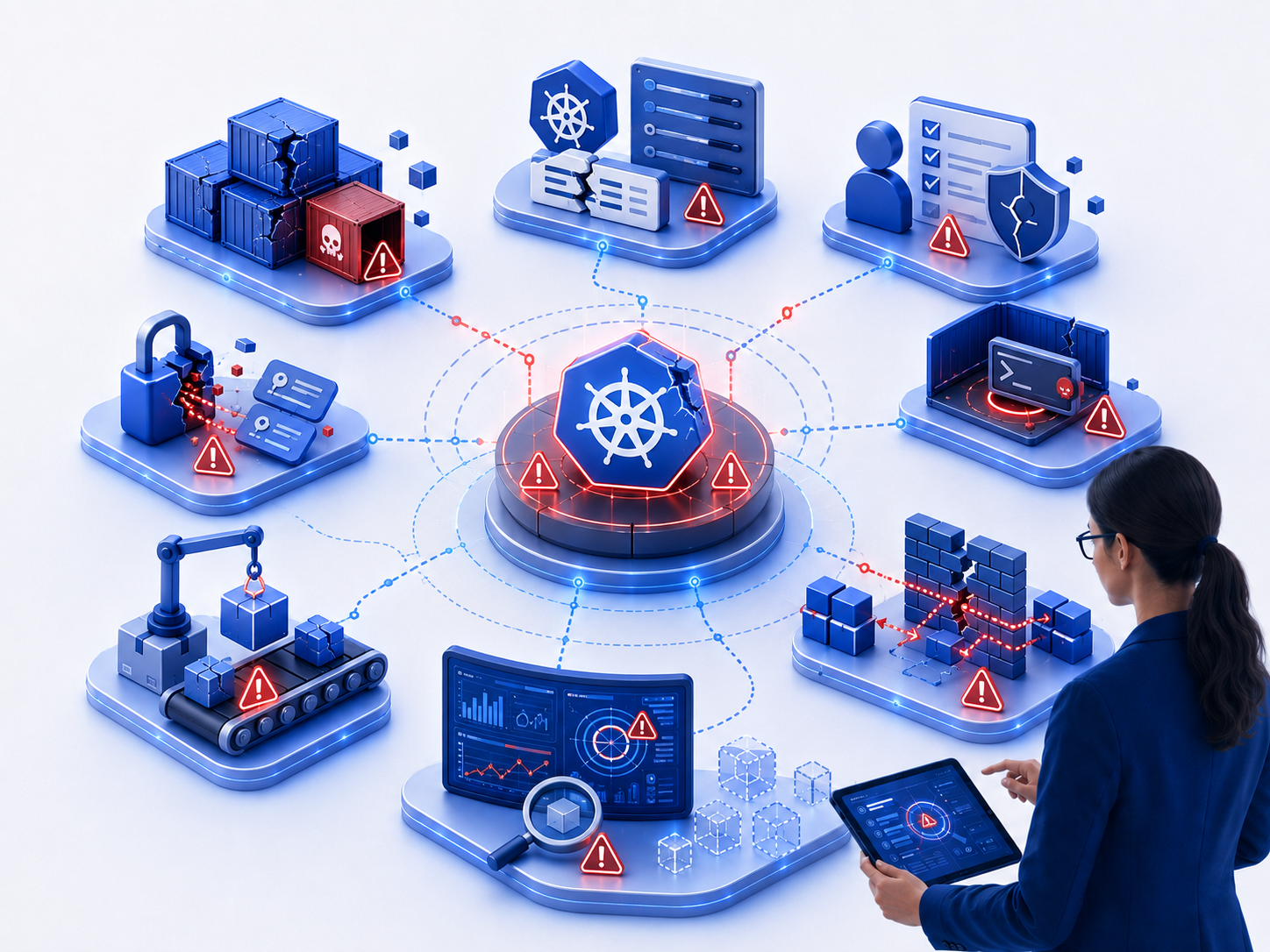
☸️ Cluster Misconfigurations – Identify insecure control planes, weak defaults, exposed dashboards, and unsafe cluster settings.
🔐 Excessive RBAC Permissions – Detect broad roles, privileged service accounts, inherited access, and escalation opportunities.
📦 Vulnerable Container Images – Identify outdated packages, malware, embedded secrets, and exploitable dependencies.
🔑 Exposed Secrets – Detect plaintext credentials, insecure tokens, weak encryption, and sensitive configuration exposure.
🌐 Network Segmentation Gaps – Identify unrestricted pod communication, exposed services, and uncontrolled lateral movement.
🚪 Container Escape Risk – Assess privileged workloads, host access, unsafe capabilities, and runtime-isolation weaknesses.
⚙️ Software Supply Chain Risk – Detect insecure pipelines, unsigned images, untrusted dependencies, and manipulated artifacts.

🛡️ Reduced Workload Exposure – Reduce vulnerable images, excessive privileges, misconfigurations, and runtime attack paths.
☸️ Improved Cluster Protection – Harden Kubernetes control planes, nodes, namespaces, and administrative interfaces.
🔐 Reduced Privilege Exposure – Enforce least privilege across users, roles, workloads, and service accounts.
🌐 Restricted Lateral Movement – Strengthen segmentation and secure communication across pods, services, and workloads.
📋 Improved Compliance Readiness – Align controls with CIS Benchmarks, NIST, ISO 27001, PCI DSS, and internal standards.
Container & Kubernetes Security protects container images, registries, clusters, workloads, identities, networks, secrets, and runtime environments from vulnerabilities, misconfigurations, unauthorized access, and cloud-native threats.
Kubernetes environments are dynamic, highly distributed, and identity-driven. Security weaknesses across RBAC, service accounts, APIs, network policies, secrets, images, and workloads can create complex attack paths that traditional security tools may not detect.
CliffGuard identifies vulnerable images, exposed secrets, excessive privileges, insecure RBAC, weak network policies, exposed services, configuration drift, risky workloads, disabled logging, runtime threats, and compliance gaps.
We assess container images for vulnerabilities, malware, outdated packages, insecure dependencies, embedded secrets, excessive components, and unauthorized sources. We also support image signing, provenance validation, registry security, and remediation.
Kubernetes security integrates scanning, policy enforcement, admission controls, secrets protection, and configuration checks into CI/CD pipelines. This helps teams detect and remediate risks before workloads reach production.
Yes. CliffGuard helps organizations monitor container processes, file changes, network activity, privilege escalation, malware, suspicious commands, container escapes, and abnormal workload behavior during runtime.
CliffGuard combines cloud-native security, Kubernetes hardening, DevSecOps, identity governance, runtime protection, compliance, and risk-management expertise to secure containerized environments throughout their complete lifecycle.
Container security requires visibility across images, clusters, identities, workloads, networks, and runtime activity. CliffGuard combines Kubernetes assessment, workload hardening, control validation, and continuous monitoring to create a clear path from cloud-native exposure to stronger enterprise resilience.
Gain a clear, executive-level view of container and Kubernetes risk across your enterprise. CliffGuard identifies critical weaknesses, strengthens workload controls, prioritizes remediation, and develops a practical roadmap for measurable and sustainable cloud-native security improvement.