
From Investigation to Recovery
Strengthening Cyber Resilience

CliffGuard’s Digital Forensics, Incident Response (DFIR) & Cyber Investigation Services help organizations respond to complex cyber incidents, determine what happened, preserve critical evidence, and understand the full scope of compromise. We investigate ransomware, data breaches, insider activity, account compromise, cloud incidents, cyber fraud, malware, and other high-impact security events across modern enterprise environments.
Our specialists combine forensic investigation, incident response, attack reconstruction, evidence preservation, malware analysis, and investigative intelligence to uncover attacker activity, support containment and recovery, and provide defensible findings for technical, executive, legal, regulatory, and insurance stakeholders.
Digital Forensics and Incident Response (DFIR) combines forensic examination with coordinated incident response to identify attacker activity, determine compromise scope, preserve evidence, contain threats, and support secure recovery. It provides organizations with both immediate operational response and deeper investigative understanding.
Cyber investigations extend beyond technical containment by reconstructing attack paths, examining user and adversary behavior, analyzing digital artifacts, establishing timelines, tracing unauthorized access, and determining whether sensitive systems or data were affected. Investigations may involve endpoints, identities, networks, cloud platforms, SaaS environments, mobile devices, email systems, and malicious code.
CliffGuard applies structured practices aligned with NIST SP 800-61 Rev. 3, NIST CSF 2.0, ISO/IEC 27035-1:2023, ISO/IEC 27037, and established forensic evidence-handling principles to support consistent investigation, preservation, analysis, response, recovery, and post-incident improvement.
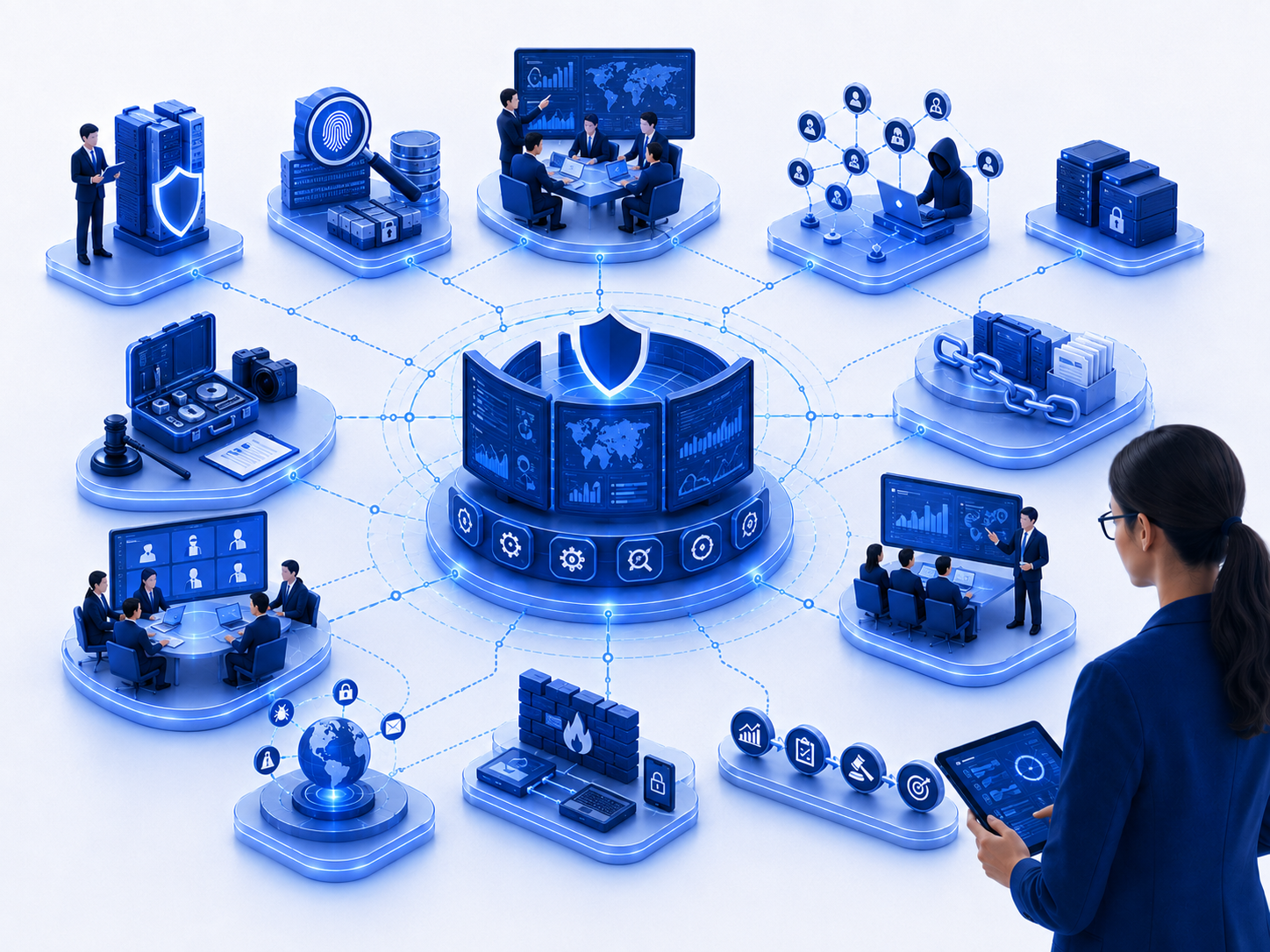
CliffGuard’s Incident Response & Cyber Investigation Services help organizations investigate cyber incidents, contain active threats, determine attack scope, and restore critical operations across endpoint, identity, cloud, network, and application environments. From rapid incident triage and attack reconstruction to compromise scoping, containment, eradication, recovery coordination, and post-incident improvement, our experts help reduce business impact, accelerate response, and strengthen enterprise resilience without unnecessary operational disruption.
Our Incident Response & Breach Investigation services deliver rapid containment, forensic analysis, and evidence-driven investigation across systems, identities, applications, and cloud environments. We establish incident scope, attacker activity, and root cause to reduce breach impact, business disruption, and recurrence risk.
Our Ransomware & Extortion Investigation services deliver rapid containment, forensic analysis, and evidence-driven investigation across affected systems, identities, and data. We determine attack scope, intrusion paths, and attacker activity to reduce business disruption, data loss, and recurrence risk.
Our Data Breach & Exfiltration Investigation services uncover how sensitive information was accessed, moved, and exposed across systems and cloud environments. We trace attacker activity, preserve critical evidence, and identify affected data to support containment, regulatory response, and breach recovery.
Our Endpoint, Network & Mobile Forensics services uncover digital evidence across devices, networks, and mobile environments. We reconstruct activity, trace compromise, and preserve forensic evidence to support incident scoping, root-cause analysis, and legal or regulatory response.
Our Cloud, SaaS & Identity Forensics services investigate activity across cloud platforms, SaaS applications, and identity systems. We trace access, privilege misuse, configuration changes, and attacker actions to support incident scoping, evidence preservation, and containment.
Our Insider Threat & Corporate Investigation services examine suspicious employee, contractor, and privileged-user activity across systems and data. We identify misuse, policy violations, and evidence of misconduct to support incident scoping, legal response, and risk reduction.
Our BEC & Cyber Fraud Investigation services examine compromised accounts, fraudulent transactions, and attacker communications across email and identity systems. We trace access, payment manipulation, and threat activity to support fraud containment, evidence preservation, and financial recovery.
Our Malware Analysis & Reverse Engineering services examine malicious code, payloads, and attacker tooling to uncover behavior, capabilities, and persistence mechanisms. We identify indicators, execution patterns, and technical weaknesses to support threat detection, incident response, and risk reduction.
Our eDiscovery & Digital Evidence Preservation services collect, preserve, and manage digital evidence across devices, email, cloud platforms, and business systems. We maintain evidence integrity, chain of custody, and defensible handling to support legal proceedings, regulatory matters, and investigations.
Establish incident objectives, affected environments, stakeholders, evidence sources, and response priorities. Preserve volatile and persistent evidence using controlled collection and documented handling procedures.
Assess indicators, suspicious activity, impacted assets, identities, attack vectors, and business-critical systems. Determine immediate containment requirements while defining the likely scope of compromise.
Correlate endpoint, identity, network, cloud, email, application, and forensic artifacts. Reconstruct attacker activity, initial access, persistence, lateral movement, privilege escalation, and data-access timelines.
Use investigation findings to guide targeted containment, eradication, credential resets, access restrictions, remediation, and secure restoration. Preserve investigative integrity while minimizing unnecessary operational disruption.
Document findings, evidence, attack timelines, root causes, affected assets, and remediation priorities. Translate lessons learned into stronger detection, response readiness, forensic visibility, and security controls.
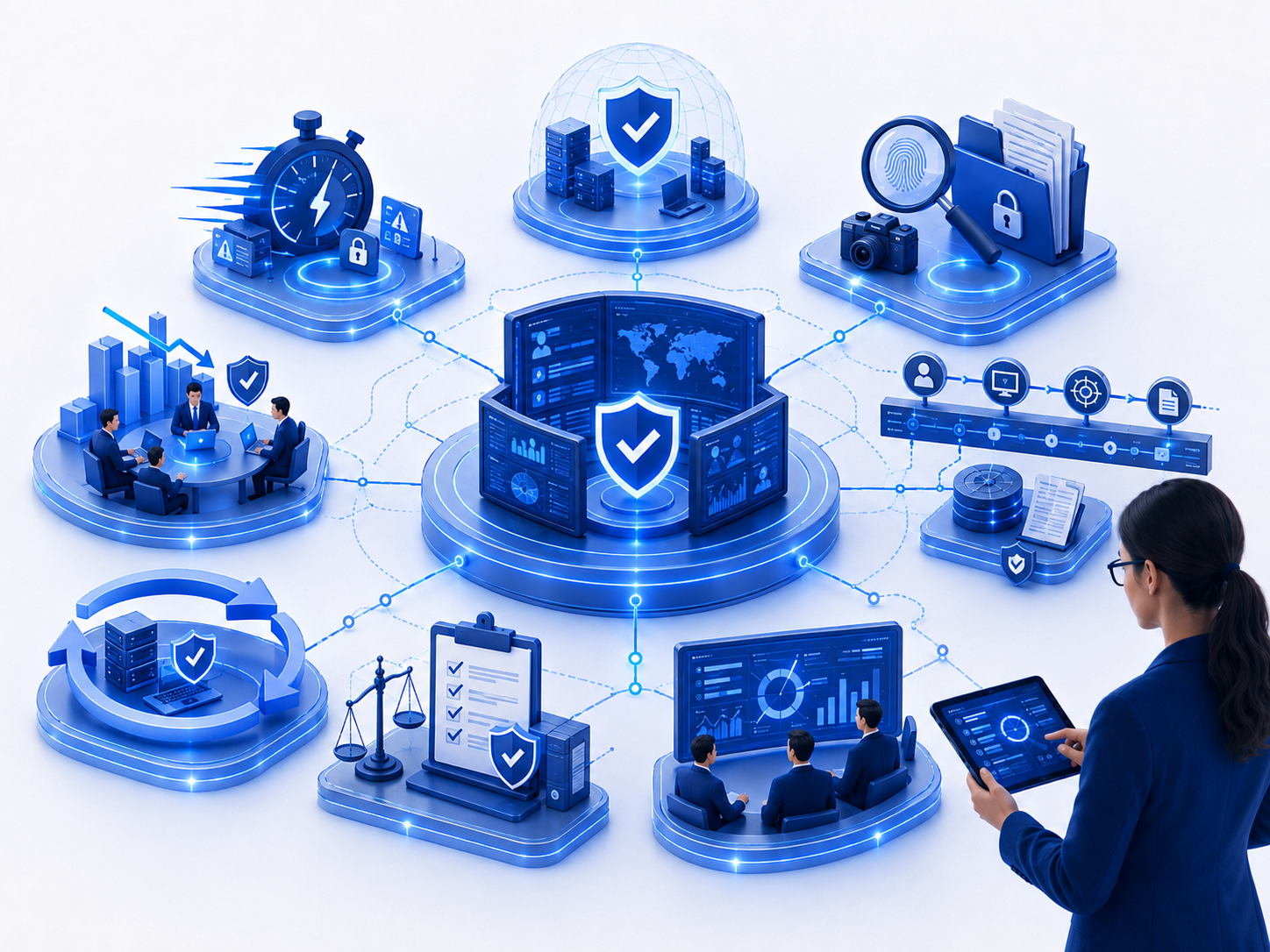
🧬 Forensic-Led Investigation – Establish timelines, scope, attacker activity, and incident facts.
⚡ Rapid Response Mobilization – Experienced investigators accelerate triage, scoping, containment, and coordination.
🏢 Reduced Business Disruption – Prioritize response actions around essential services and operational dependencies.
🔄 Safer Recovery – Restore affected systems after remediation, validation, and removal of attacker access.
📊 Stronger Executive Decisions – Provide leadership with incident status, impact, priorities, and recovery progress.
🧠 Improved Response Readiness – Convert incident lessons into stronger controls, playbooks, and resilience.
We were struggling with ISO 27001 documentation and implementation until we partnered with CliffGuard. Their team handled everything from gap analysis to internal audits, and we achieved certification on our first attempt. Their expertise in cybersecurity compliance is unmatched.

Doha, Qatar
Their VAPT service was incredibly detailed. The penetration testing uncovered critical vulnerabilities we weren’t aware of, and their report gave clear remediation steps. It helped us secure our infrastructure and meet compliance requirements.

India
When we faced a suspected breach, CliffGuard responded instantly. They contained the threat, conducted a forensic investigation, and helped with legal reporting. We were back online securely within hours.

USA
Our mobile payment app needed security clearance before launch. Their mobile VAPT service revealed key issues, from API flaws to insecure data storage. Fixing them early saved us from future breaches and regulatory issues.

India
Services can include incident triage, attack investigation, compromise scoping, threat containment, eradication, recovery coordination, and post-incident improvement across endpoint, identity, network, cloud, and application environments. Engagements are structured to help organizations understand what happened, determine what remains at risk, and coordinate appropriate response actions.
Organizations should engage support when ransomware, unauthorized access, identity compromise, cloud intrusion, malware, lateral movement, or suspicious activity creates material cyber risk or uncertainty about compromise. Early engagement helps accelerate investigation, preserve response options, contain attacker activity, and reduce operational and business impact.
CliffGuard can support investigations involving ransomware, account compromise, endpoint intrusion, cloud attacks, malicious access, persistent threats, credential abuse, and other incidents affecting critical enterprise systems. Investigations focus on attacker activity, affected assets, access paths, persistence, and potential impact on business operations.
Investigators correlate timelines, identities, systems, telemetry, attacker behavior, access paths, and affected services to determine initial access, attack progression, compromise scope, and critical asset exposure. Findings help leadership understand operational impact, response priorities, containment requirements, and remaining business risk.
Containment decisions consider threat severity, attacker activity, asset criticality, business dependencies, and recovery requirements before restricting systems or access. This risk-based approach helps disrupt malicious activity while protecting essential services, preserving operational continuity, and avoiding unnecessary interruption to critical business functions.
Yes. CliffGuard can coordinate with SOC, MDR, IT, cloud, identity, network, legal, communications, and executive stakeholders through defined escalation and decision processes. This helps align technical containment, business priorities, recovery activities, communications, and executive oversight throughout the incident lifecycle.
Engagements can align with NIST SP 800-61 Rev. 3, NIST CSF 2.0, ISO/IEC 27035-1:2023, and established incident-response practices covering preparation, detection, analysis, containment, recovery, and improvement. These frameworks support consistent response governance, structured decision-making, and stronger post-incident resilience.
sales@cliffguard.com
Bengaluru, India
Dubai, UAE
Muscat, Oman