











Designed to protect what matters
before threats strike.
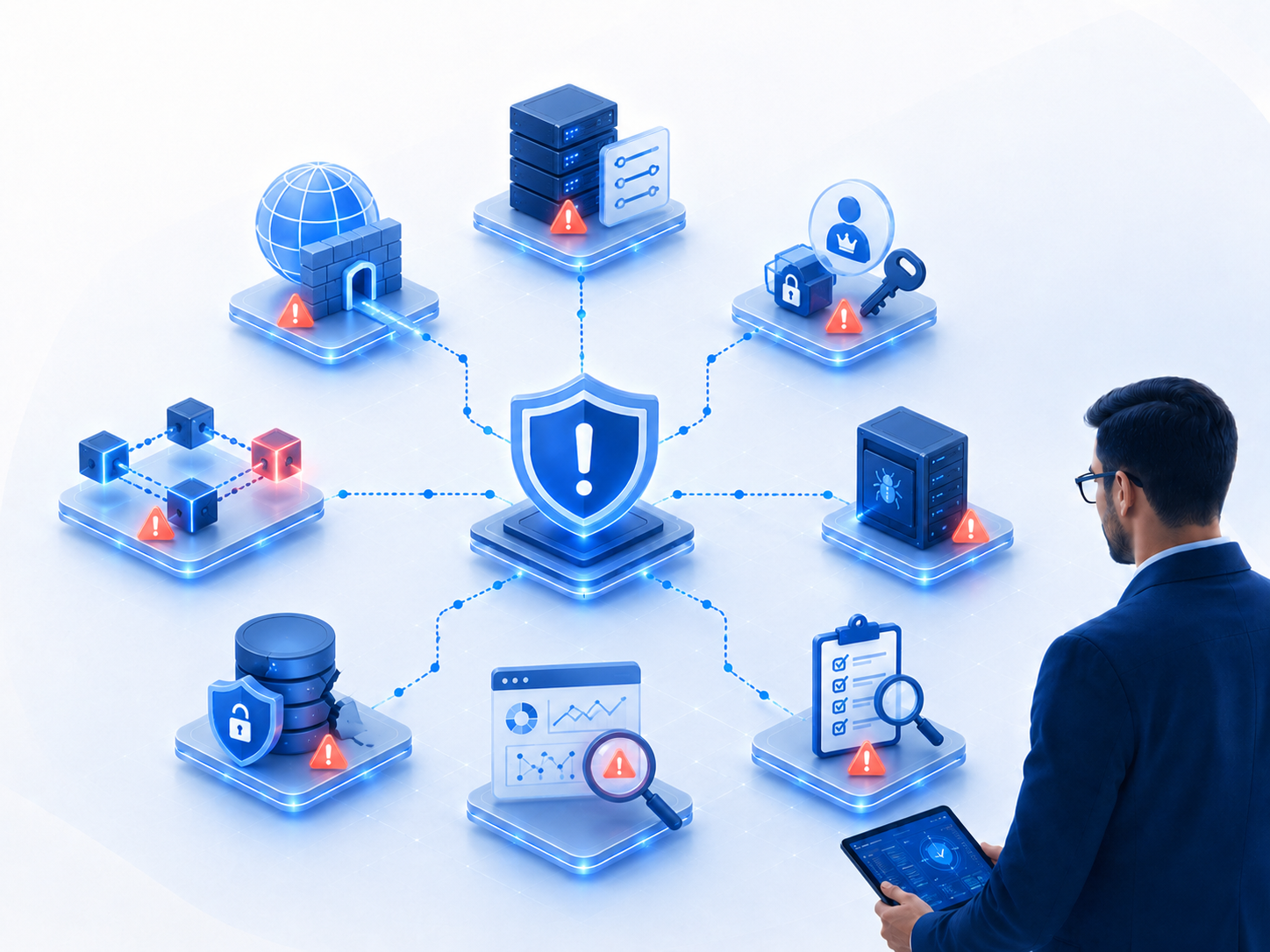
Organizations rely on cloud platforms, networks, servers, endpoints, data centers, and hybrid infrastructure to support critical business services. Misconfigurations, excessive privileges, exposed services, weak segmentation, outdated systems, and limited monitoring can increase attack surface and create operational, compliance, and cyber risk.
CliffGuard’s Cloud & Infrastructure Security Assessments help organizations identify security gaps, validate technical controls, prioritize remediation, and strengthen protection across cloud and on-premises environments. We connect technical findings with business impact to improve security posture and resilience.
Cloud Security Assessments evaluate cloud architecture, configurations, identities, workloads, data, logging, and security services to identify weaknesses that could expose enterprise resources.
Infrastructure Security Assessments examine networks, servers, operating systems, virtualization, remote access, security devices, and management controls across on-premises and hybrid environments.
CliffGuard combines cloud posture review, infrastructure assessment, configuration analysis, access validation, control testing, and executive reporting to provide a clear view of exposure and prioritized security improvements.

☁️ Cloud Security Assessment – Review cloud architecture, configurations, services, workloads, data protection, and security controls.
🌐 Network & Infrastructure Review – Assess network architecture, segmentation, firewalls, remote access, servers, and management interfaces.
🔐 Identity & Access Assessment – Evaluate IAM, privileged access, service identities, authentication, permissions, and least privilege.
⚙️ Configuration & Hardening Review – Compare systems and cloud services against approved baselines, CIS Benchmarks, and security requirements.
🧪 Control & Exposure Validation – Validate technical controls, internet exposure, logging, monitoring, vulnerabilities, and remediation status.
📊 Risk Prioritization & Reporting – Translate findings into business risk, remediation priorities, ownership actions, and executive reporting.
Define the assessment boundaries, business-critical services, cloud platforms, data centers, networks, applications, and compliance requirements. Build an inventory of accounts, systems, workloads, identities, data stores, security tools, and internet-facing assets.
Analyze infrastructure architecture, trust boundaries, network flows, administrative access paths, cloud connectivity, remote access, and data movement. Identify design weaknesses, concentration risks, insecure dependencies, and exposed attack surfaces.
Evaluate IAM, privileged access, network segmentation, system hardening, encryption, vulnerability management, logging, monitoring, backups, and resilience controls. Validate whether controls are properly configured, consistently enforced, and operating effectively.
Correlate vulnerabilities, misconfigurations, excessive permissions, exposed services, and monitoring gaps to identify realistic attack paths. Validate high-risk findings and determine their potential impact on critical systems, sensitive data, and business operations.
Deliver a prioritized remediation roadmap with technical guidance, ownership, timelines, and control recommendations. Reassess corrected findings, validate remediation effectiveness, and provide updated risk and compliance status.
☁️ Cloud Misconfigurations – Identify insecure services, exposed resources, weak settings, and disabled security controls.
🖧 Network Exposure – Detect open ports, insecure protocols, weak segmentation, and unrestricted connectivity.
🔐 Excessive Permissions – Identify broad roles, standing privileges, dormant accounts, and unnecessary administrative access.
🖥️ Unhardened Systems – Expose outdated software, unnecessary services, weak configurations, and missing security baselines.
📂 Data Protection Gaps – Detect weak encryption, insecure backups, excessive sharing, and uncontrolled data access.
🔗 Infrastructure Attack Paths – Map identities, systems, networks, and cloud weaknesses into realistic compromise scenarios.
🚨 Monitoring Weaknesses – Identify missing logs, ineffective alerts, fragmented visibility, and limited investigation context.
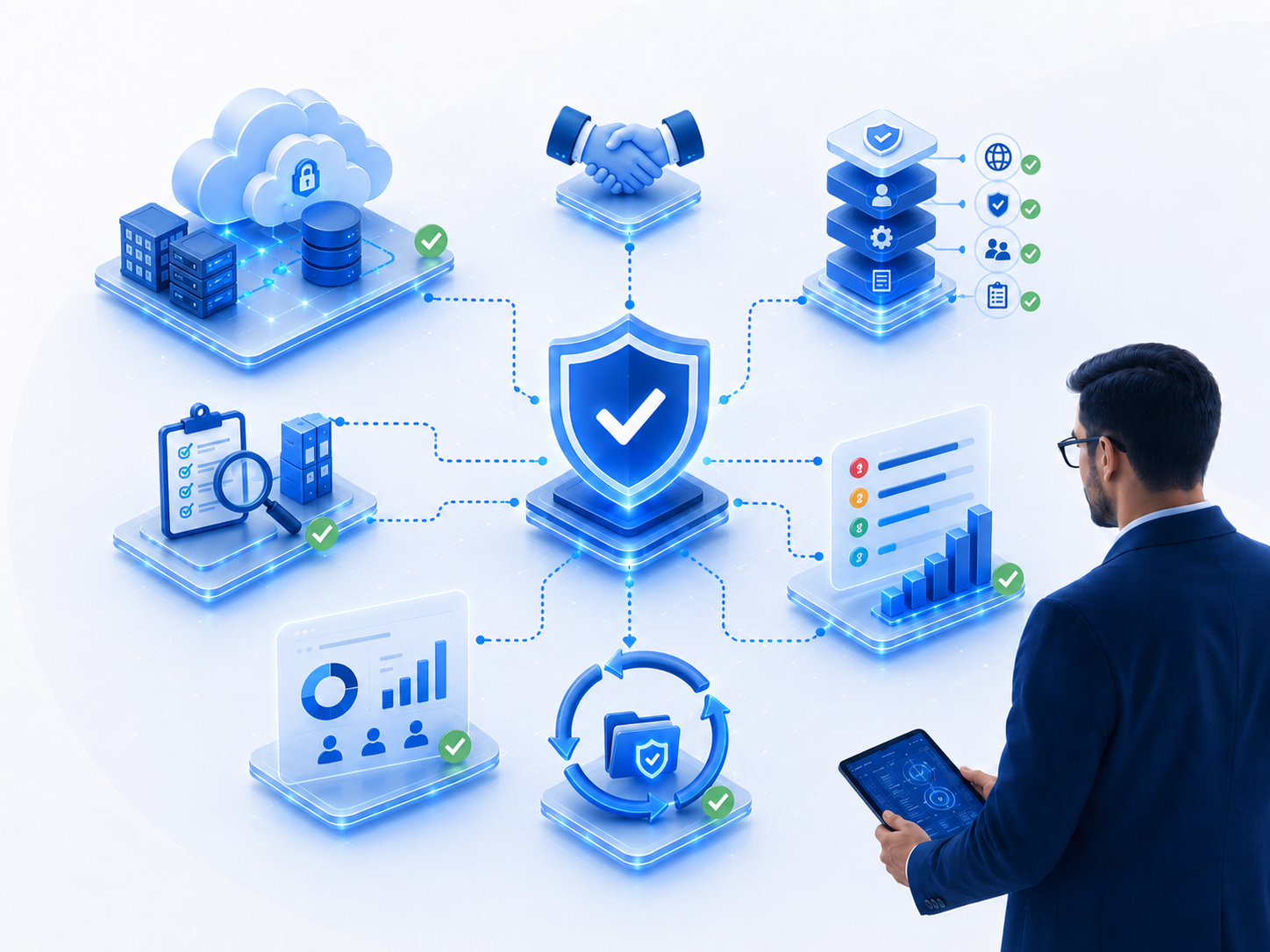
🔍 Greater Risk Visibility – Understand infrastructure exposure, control weaknesses, attack paths, and remediation priorities.
☁️ Stronger Cloud Security – Reduce misconfigurations, exposed resources, excessive access, and insecure cloud services.
🛡️ Improved Infrastructure Protection – Strengthen servers, networks, workloads, databases, and security configurations.
🔐 Reduced Access Risk – Improve identity governance, authentication, permissions, and privileged-access controls.
📋 Enhanced Compliance Readiness – Align infrastructure security with recognized standards and regulatory requirements.
The assessment reviews cloud platforms, networks, servers, virtual environments, databases, storage, identities, access controls, configurations, vulnerabilities, monitoring, backups, and security architecture.
Vulnerability scanning identifies known technical weaknesses. A security assessment also evaluates architecture, configurations, permissions, segmentation, monitoring, operational processes, and interconnected attack paths.
CliffGuard assesses AWS, Microsoft Azure, Google Cloud Platform, private cloud, multi-cloud, hybrid cloud, and cloud-connected on-premises infrastructure.
Yes. We assess data centers, servers, operating systems, networks, firewalls, databases, storage, virtualization platforms, remote access, and administrative security controls.
Assessments are planned according to environment criticality and operational requirements. Most review activities are non-disruptive, while higher-risk validation activities are carefully controlled and coordinated.
Deliverables typically include an executive summary, detailed technical findings, risk ratings, affected assets, evidence, attack scenarios, remediation guidance, compliance mappings, and a prioritized improvement roadmap.
CliffGuard combines cloud security, infrastructure testing, architecture review, identity security, compliance, and attacker-focused analysis to deliver practical assessments that expose real risks and support measurable security improvement.
Cloud and infrastructure risk cannot be reduced without understanding current exposure, control effectiveness, and business impact. CliffGuard combines security assessment, control validation, risk prioritization, and remediation planning to create a clear path toward stronger enterprise resilience.
Gain a clear, executive-level view of cloud and infrastructure security across your enterprise. CliffGuard identifies critical weaknesses, validates controls, prioritizes remediation, and develops a practical roadmap for measurable and sustainable security improvement.