









Designed to protect what matters
before threats strike.
Organizations create and manage growing volumes of sensitive, regulated, confidential, and business-critical data across cloud, SaaS, endpoints, applications, collaboration platforms, and third parties. Poor visibility, inconsistent classification, unclear ownership, and weak handling rules can increase privacy, compliance, security, and operational risk and weaken stakeholder confidence.
CliffGuard’s Data Governance & Classification Services establish structured ownership, classification standards, handling requirements, retention rules, and control alignment. We help organizations understand where sensitive data exists, apply consistent protection requirements, and build governance practices that support security, compliance, privacy, and business resilience across enterprise environments.
Data Governance defines how information is owned, managed, protected, retained, shared, monitored, and governed across the organization throughout its lifecycle.
Data Classification categorizes information according to sensitivity, criticality, legal obligations, business value, required protection, and operational use.
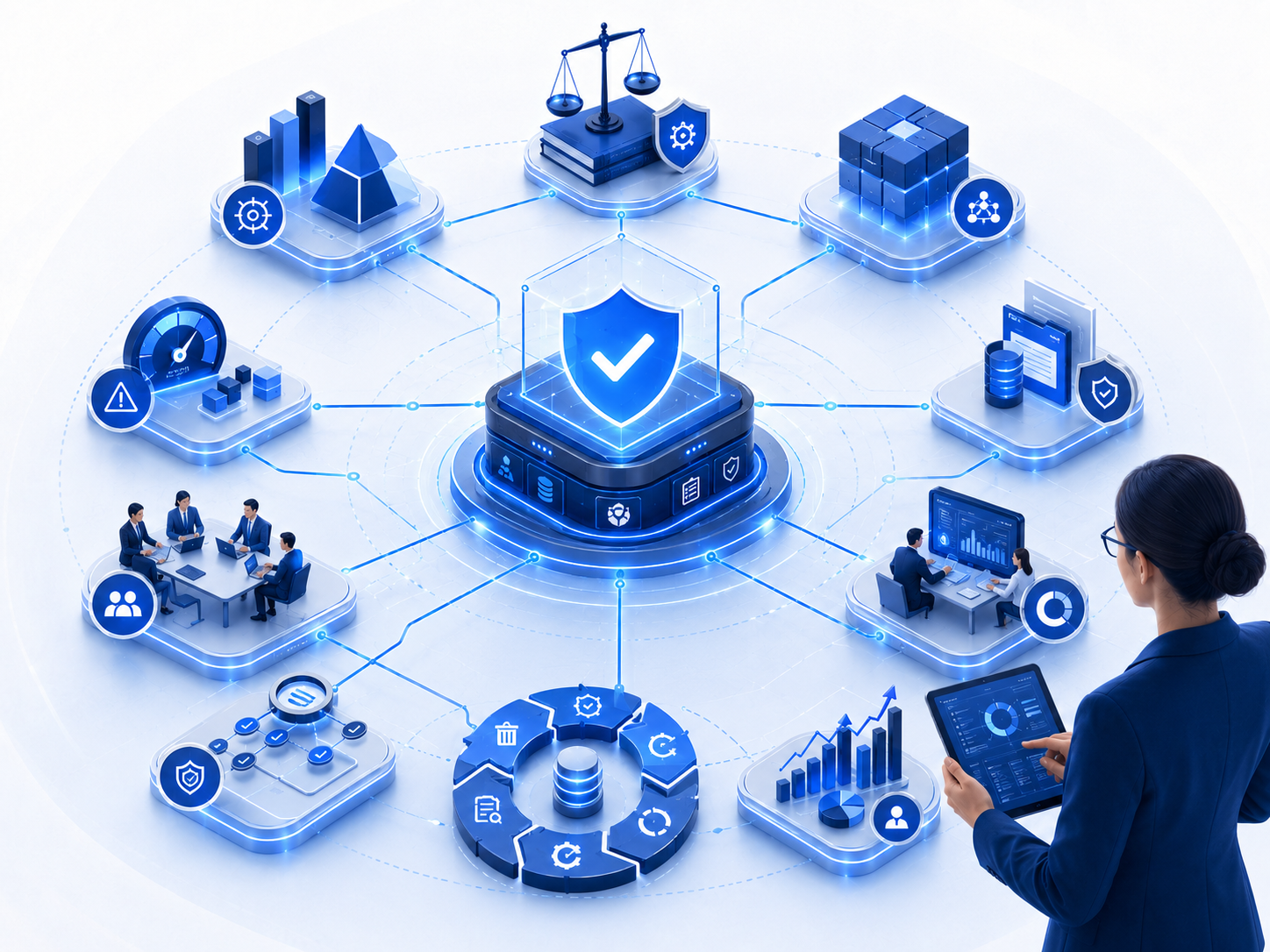
CliffGuard combines data discovery, classification models, ownership frameworks, handling standards, control mapping, and governance reporting to build practical data-protection programs across business functions—not isolated labeling exercises.

🗂️ Data Governance Framework Design – Establish ownership, stewardship, decision rights, policies, standards, and governance structures.
🏷️ Data Classification Model Development – Define practical classification levels, criteria, labels, ownership, and handling expectations.
🔍 Sensitive Data Discovery & Mapping – Identify critical data, repositories, flows, systems, users, and external dependencies.
🛡️ Data Handling & Protection Standards – Define access, encryption, sharing, storage, transfer, retention, and disposal requirements.
📋 Regulatory & Control Alignment – Map data controls to privacy, security, contractual, and industry requirements.
🔄 Governance Monitoring & Reporting – Track ownership, exceptions, classification coverage, remediation, metrics, and executive visibility.
Evaluate the organization’s data environment, regulatory obligations, privacy requirements, contractual commitments, existing policies, and governance practices. This establishes the foundation for a framework aligned with business and compliance needs.
Identify sensitive, regulated, confidential, and business-critical information across applications, databases, cloud platforms, endpoints, repositories, backups, and third-party environments. Build a structured inventory of priority data assets.
Define classification levels based on sensitivity, business value, regulatory obligations, and potential impact. Establish clear criteria, labels, examples, and decision rules for consistent classification.
Assign data owners, custodians, stewards, users, and approval authorities. Define accountability for classification, access, retention, protection, sharing, and lifecycle management.
Define requirements for data collection, storage, access, transmission, sharing, encryption, backup, retention, archival, and secure disposal. Controls are aligned with each classification level.
Integrate classification requirements with identity and access management, data loss prevention, encryption, cloud security, endpoint protection, monitoring, backup, and third-party risk controls.
Support classification labeling, stakeholder communication, employee awareness, technical enablement, operating procedures, and integration into daily business workflows.
Establish periodic reviews, classification validation, control testing, exception monitoring, ownership reviews, governance metrics, and executive reporting. Continuously update the framework as business, regulatory, and technology requirements evolve.
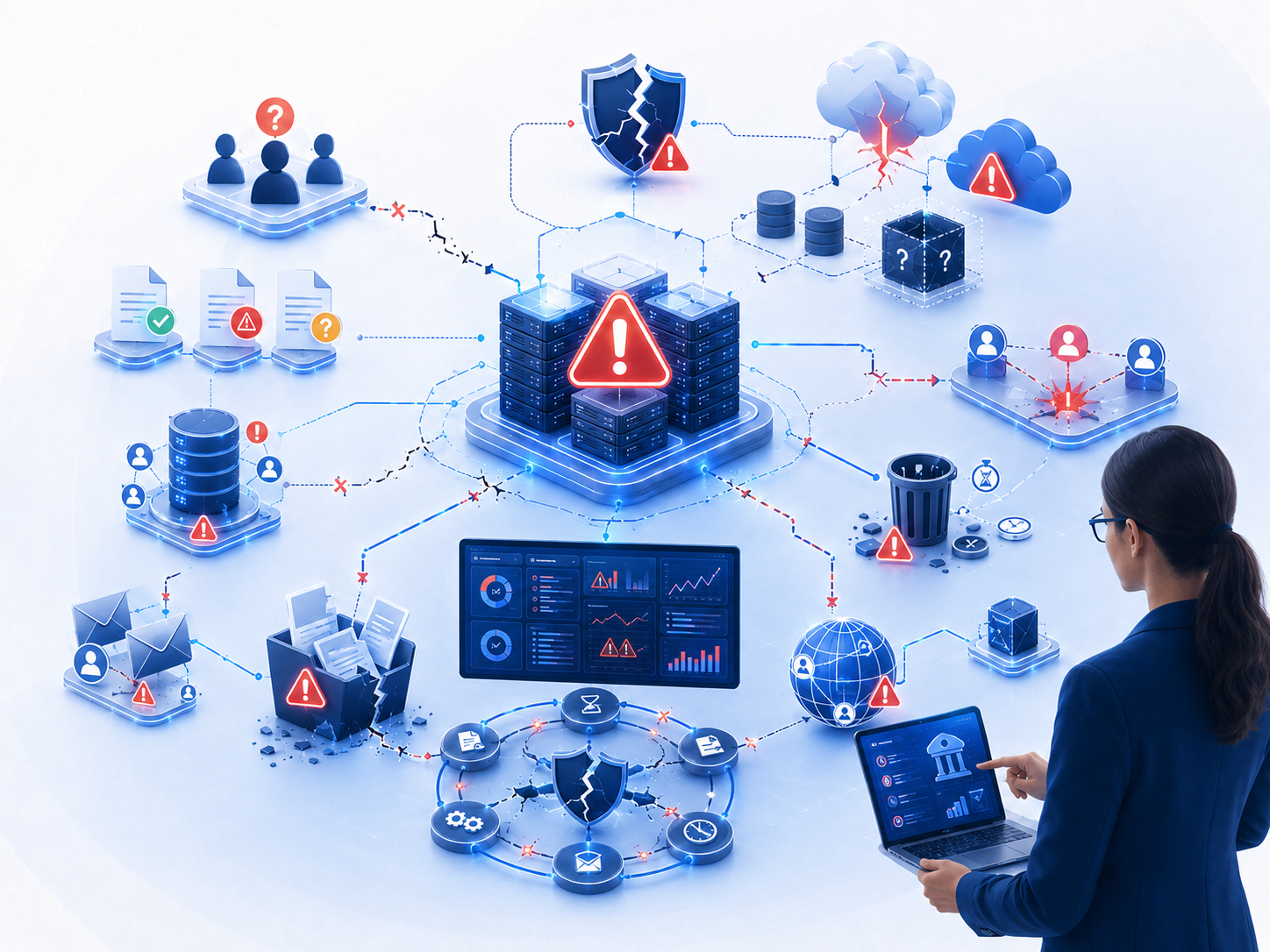
🗂️ Unclear Data Ownership – Resolve accountability gaps, weak stewardship, fragmented decisions, and inconsistent governance.
🏷️ Inconsistent Data Classification – Identify conflicting labels, unclear criteria, poor adoption, and uneven protection requirements.
🔍 Limited Data Visibility – Detect unknown repositories, unmanaged copies, shadow data, and incomplete information inventories.
🔐 Excessive Data Access – Address unnecessary privileges, weak access reviews, oversharing, and unmanaged sensitive-data exposure.
📋 Handling & Retention Gaps – Identify weak storage, sharing, transfer, retention, disposal, and lifecycle practices.
⚖️ Privacy & Regulatory Exposure – Identify data practices that may conflict with legal, contractual, or industry obligations.
🤝 Third-Party Data Risk – Expose weak external handling, unclear ownership, insecure sharing, and unmanaged provider dependencies.
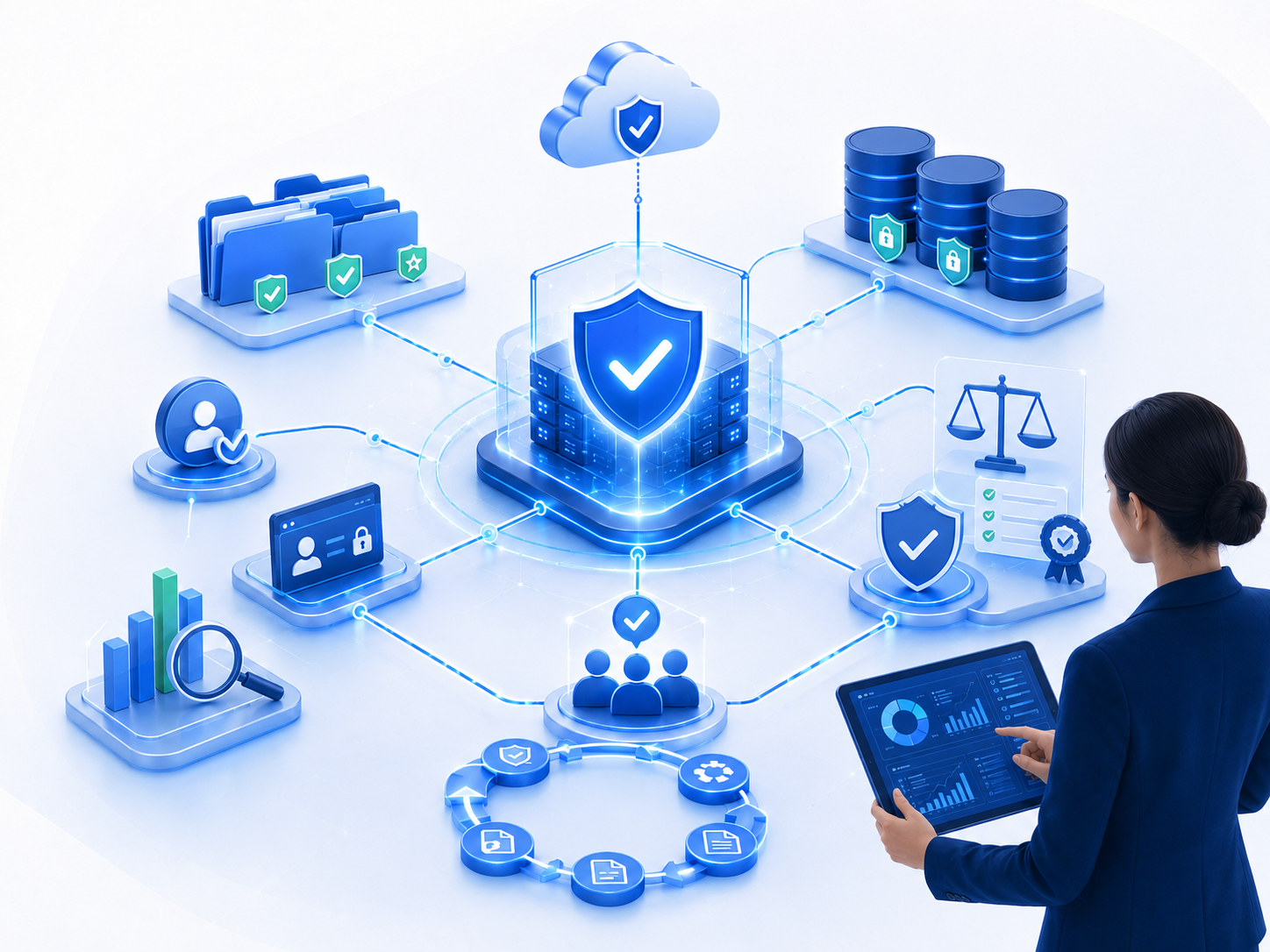
🔍 Greater Data Visibility – Understand where sensitive information exists, how it moves, and who can access it.
🛡️ Stronger Data Protection – Apply appropriate controls according to sensitivity, value, and regulatory impact.
👤 Clear Accountability – Establish ownership, stewardship, approvals, and responsibility throughout the data lifecycle.
📋 Framework Alignment – Aligned with ISO 27001, NIST, GDPR, HIPAA, PCI DSS, and SOC 2.
📋 Improved Compliance Readiness – Support privacy, security, retention, audit, and regulatory requirements.
Data governance is the framework of policies, responsibilities, standards, decision-making processes, and controls used to manage information throughout its lifecycle. It defines how data is owned, accessed, protected, shared, retained, and securely disposed of.
Data classification is the process of categorizing information based on its sensitivity, business value, regulatory requirements, and potential impact if it is accessed, altered, lost, or disclosed without authorization.
Common classification levels include Public, Internal, Confidential, Restricted, and Highly Restricted. CliffGuard tailors the classification model to the organization’s business operations, data types, regulatory obligations, risk profile, and security requirements.
Data classification enables organizations to apply appropriate access controls, encryption, monitoring, data loss prevention, retention, sharing, and disposal requirements according to the sensitivity and importance of the information.
Yes. We help identify and inventory sensitive data across cloud platforms, databases, applications, file repositories, endpoints, collaboration tools, backups, business processes, and third-party environments.
CliffGuard aligns data governance and classification programs with ISO/IEC 27001, NIST CSF, NIST Privacy Framework, GDPR, HIPAA, PCI DSS, SOC 2, privacy laws, contractual obligations, and applicable industry requirements.
CliffGuard combines data governance, privacy, cybersecurity, risk management, and compliance expertise to build classification frameworks that are practical, scalable, enforceable, and aligned with enterprise business objectives.
Establish clear data ownership with practical classification, handling requirements, protection controls, and continuous oversight. CliffGuard helps organizations reduce sensitive-data exposure, improve compliance readiness, support business decisions, and create a scalable foundation for enterprise information governance.
Strengthen information protection with data discovery, risk-based classification, and lifecycle governance. CliffGuard helps organizations identify sensitive data, define ownership, control access, and manage retention—before information exposure, misuse, or regulatory gaps create business risk.