











Designed to protect what matters
before threats strike.
Enterprise security teams collect extensive endpoint, identity, network, cloud, application, and security telemetry, yet weak analytics, outdated rules, noisy alerts, and incomplete threat coverage can allow sophisticated attacker behavior to remain undetected.
CliffGuard’s Detection Engineering & Threat Analytics Services transform security telemetry into high-fidelity detections, behavioral analytics, and threat-informed use cases that improve adversary visibility, reduce alert noise, and strengthen SOC detection effectiveness.
Detection Engineering systematically designs, builds, validates, deploys, and maintains security analytics that identify malicious behaviors across enterprise technology and security platforms.
Threat Analytics applies correlation, behavioral analysis, contextual enrichment, and adversary intelligence to security telemetry, helping analysts distinguish meaningful threats from routine activity and alert noise.
CliffGuard aligns detection programs with MITRE ATT&CK Detection Strategies, NIST CSF 2.0 Detect outcomes, and CIS Controls v8.1 audit-log practices to establish threat-informed, measurable detection coverage.

🎯 Detection Strategy & Coverage – Prioritize threats, map ATT&CK techniques, identify coverage gaps, and define detection objectives.
🧪 Detection Rule Engineering – Develop correlation rules, behavioral detections, queries, thresholds, and platform-specific security analytics.
📊 Behavioral & Threat Analytics – Analyze anomalies, attack patterns, identity behavior, sequences, and multi-stage threat activity.
📥 Telemetry & Data Engineering – Map data requirements, validate log quality, enrich events, and improve detection-ready telemetry.
🔬 Detection Testing & Validation – Test analytics against simulated techniques, validate effectiveness, and eliminate false-positive conditions.
Define critical assets, priority threats, adversary scenarios, detection objectives, and business risk. Assess existing analytics, telemetry, ATT&CK coverage, alert quality, and known detection gaps to establish engineering priorities.
Map relevant adversary techniques to required data sources, data components, observable behaviors, and detection opportunities. Design detection strategies and analytics that focus on attacker behavior rather than isolated indicators.
Develop correlation rules, behavioral analytics, queries, thresholds, and enrichment logic across supported security platforms. Test detections using representative activity and adversary techniques to confirm accuracy, coverage, and expected alert behavior.
Release validated detections through controlled change processes and monitor alert fidelity, telemetry health, analyst outcomes, false positives, and missed behaviors. Integrate actionable detections with SOC investigation and incident-response workflows.
Measure detection coverage, rule performance, threat relevance, and investigation outcomes. Tune ineffective analytics, address telemetry gaps, retire obsolete detections, and continuously improve coverage as adversary behaviors and enterprise environments change.
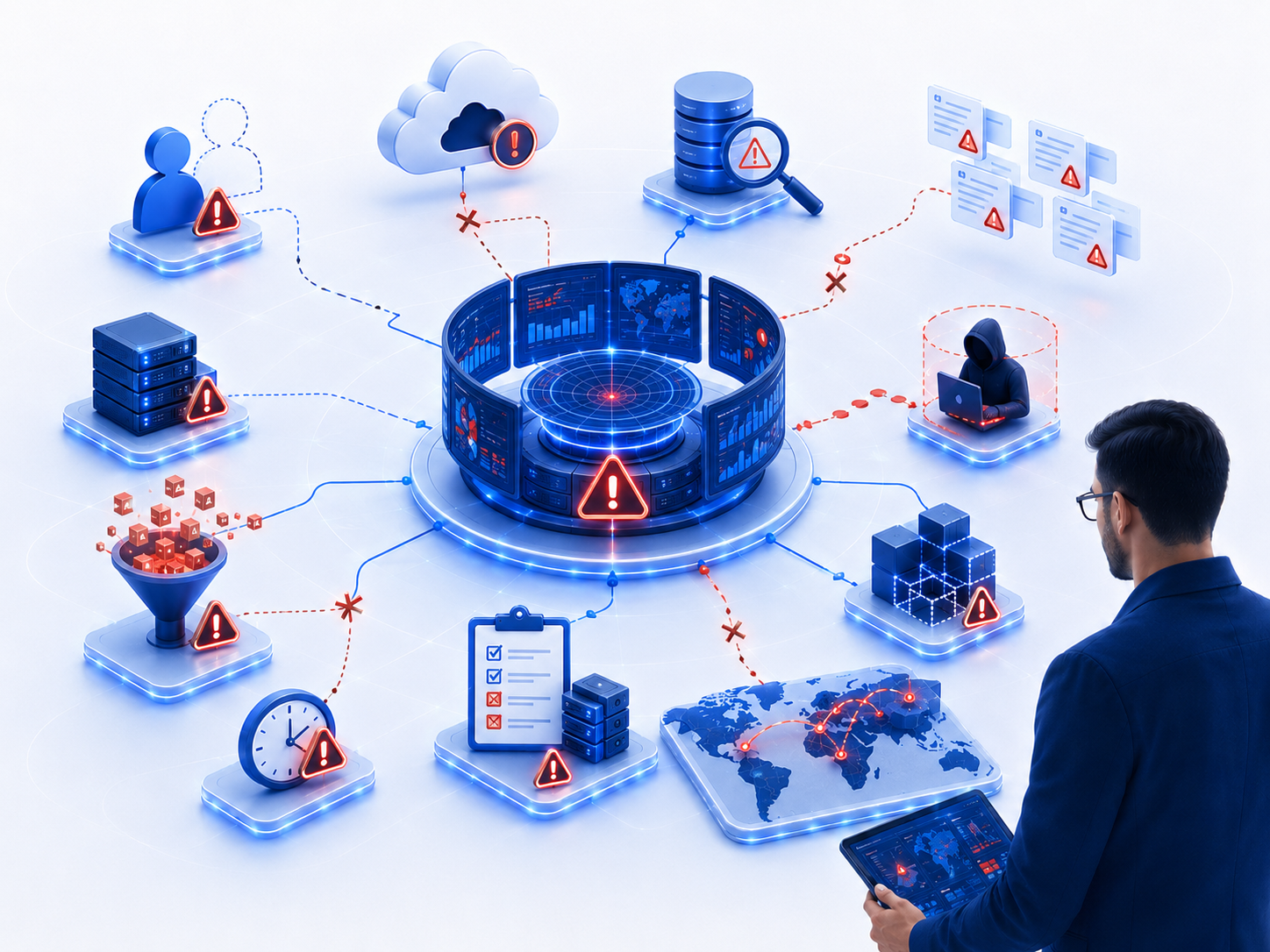
👁️ Detection Blind Spots – Identify adversary behaviors and attack techniques lacking effective detection coverage.
🚨 Excessive Alert Noise – Reduce low-value alerts, false positives, duplicates, and poorly tuned analytics.
📊 Coverage Gaps – Reveal missing detections across critical assets, attack paths, and ATT&CK techniques.
📥 Telemetry Weaknesses – Identify missing logs, poor data quality, parsing issues, and insufficient context.
🧩 Weak Event Correlation – Detect multi-stage activity hidden across identities, endpoints, networks, and cloud environments.
⏳ Outdated Detection Logic – Identify obsolete rules, stale indicators, ineffective thresholds, and legacy use cases.
🎯 Threat Misalignment – Address detections that fail to reflect relevant adversaries and enterprise risk.
🔍 Limited Analyst Context – Improve enrichment, evidence, timelines, asset context, and investigation visibility.

🎯 Improved Detection Coverage – Increase visibility across relevant adversary techniques, assets, and attack behaviors.
🚨 Higher Alert Fidelity – Reduce false positives and provide analysts with more actionable security alerts.
🔍 Faster Threat Analysis – Improve correlation, context, and investigation of suspicious enterprise activity.
⚙️ Greater SOC Efficiency – Reduce manual analysis, repetitive tuning, and unnecessary analyst workload.
📊 Measurable Detection Performance – Track coverage, rule effectiveness, gaps, tuning, and improvement over time.
Cloud Security & Compliance is the practice of protecting cloud infrastructure, applications, workloads, identities, and sensitive data while ensuring adherence to regulatory and industry standards. As organizations adopt AWS, Microsoft Azure, Google Cloud, and hybrid cloud environments, continuous cloud security and compliance become essential for preventing data breaches, reducing cyber risk, and maintaining business resilience.
CliffGuard secures Amazon Web Services (AWS), Microsoft Azure, Google Cloud Platform (GCP), hybrid cloud, multi-cloud, containers, Kubernetes, and SaaS environments. Our experts provide continuous monitoring, cloud posture management, identity security, and compliance support across your entire cloud ecosystem.
Our Cloud Security & Compliance services help detect and mitigate cloud misconfigurations, excessive IAM permissions, exposed storage, compromised accounts, insecure APIs, ransomware, data exfiltration, container vulnerabilities, Kubernetes threats, shadow IT, and cloud identity attacks before they impact your organization.
We help organizations achieve and maintain compliance with leading standards and regulations, including ISO/IEC 27001, SOC 2, PCI DSS, HIPAA, GDPR, NIST Cybersecurity Framework, CIS Benchmarks, and other industry-specific regulatory requirements, ensuring continuous audit readiness.
Traditional security primarily protects on-premises infrastructure, whereas Cloud Security focuses on securing cloud-native resources, identities, workloads, APIs, storage, and dynamic environments. It requires continuous visibility, Zero Trust access controls, cloud posture management, and real-time threat detection to address evolving cloud risks.
CliffGuard combines Cloud Security Posture Management (CSPM), Identity & Access Management (IAM), cloud workload protection, continuous threat monitoring, risk assessments, and compliance management to reduce your cloud attack surface, strengthen governance, and improve overall cyber resilience.
Investing in Cloud Security & Compliance helps organizations reduce cyber risk, protect sensitive data, maintain regulatory compliance, strengthen customer trust, improve operational resilience, and securely accelerate digital transformation. A proactive cloud security strategy minimizes the likelihood of costly breaches while enabling confident business growth.
CliffGuard combines detection engineering, threat analytics, ATT&CK-aligned coverage, and detection validation to uncover blind spots, improve signal quality, reduce false positives, and build stronger enterprise detection capabilities.
Build detections that surface what matters. CliffGuard engineers and validates threat-informed analytics, strengthens ATT&CK coverage, reduces alert noise, and gives SOC teams higher-confidence signals for faster investigation and response.