











From External Discovery to Control
Reducing Exposure
Enterprise attack surfaces expand continuously through new domains, cloud workloads, internet-facing applications, APIs, remote-access services, shadow infrastructure, forgotten systems, and technology changes. Assets that security teams do not know about can still be discovered, profiled, and exploited by attackers.
CliffGuard’s External Attack Surface Intelligence Services provide an attacker-view of your externally visible environment. We continuously discover assets, map ownership, validate exposure, identify exploitable conditions, and prioritize findings according to business relevance, accessibility, and likely attacker opportunity.
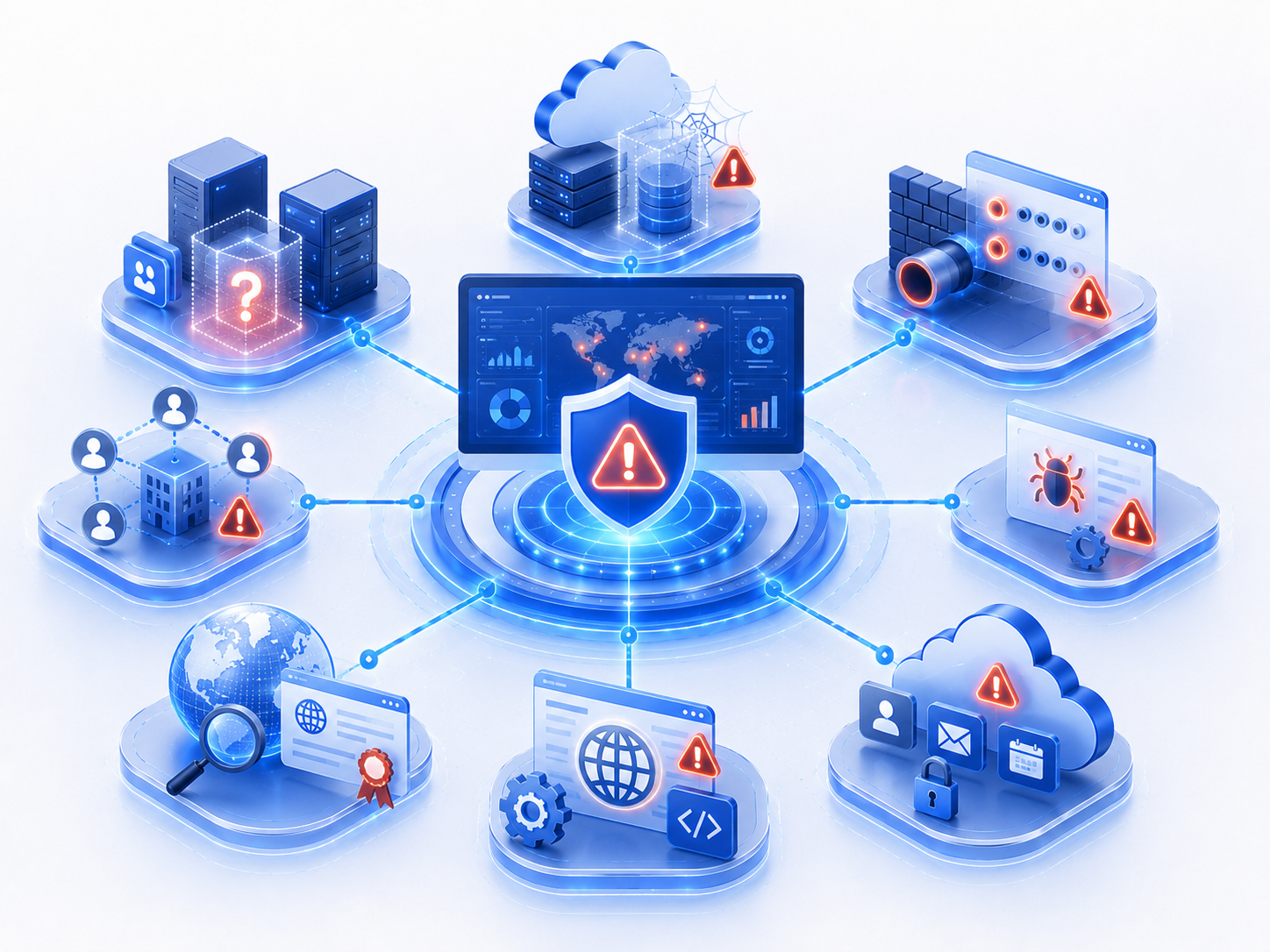
External Attack Surface Intelligence continuously identifies and analyzes the digital assets an attacker can observe from outside the organization. This includes domains, subdomains, IP addresses, applications, APIs, cloud services, certificates, remote-access systems, and externally reachable infrastructure.
Unlike a conventional vulnerability scan restricted to a predefined asset list, attack surface intelligence starts with discovery. It helps uncover assets security teams may not know they own, systems deployed outside normal processes, forgotten environments, and exposures created through infrastructure changes.
CliffGuard combines asset discovery, ownership attribution, technology fingerprinting, exposure validation, contextual enrichment, and analyst-led prioritization to show not only what is externally visible, but which exposures create meaningful attacker opportunity and should be addressed first.

🌐 External Asset Discovery – Identify domains, subdomains, IPs, applications, cloud assets, services, and exposed infrastructure.
🧭 Asset Attribution & Mapping – Correlate discovered assets with ownership, business units, environments, and associated infrastructure.
🔎 Technology & Service Intelligence – Identify exposed technologies, frameworks, services, certificates, ports, and application components.
⚠️ Exposure & Weakness Validation – Validate risky services, vulnerable technologies, exposed interfaces, and security control weaknesses.
☁️ Cloud & Shadow Asset Discovery – Surface unmanaged cloud workloads, forgotten environments, and externally accessible shadow infrastructure.
Establish known domains, brands, network ranges, cloud environments, subsidiaries, technologies, and critical business services. These initial references provide starting points for broader outside-in discovery.
Identify related domains, subdomains, IP infrastructure, cloud assets, certificates, applications, APIs, exposed services, and connected external systems. Expand discovery beyond the organization’s existing asset inventory.
Determine likely ownership and business relevance while enriching assets with technology, hosting, DNS, certificates, services, exposure characteristics, and infrastructure relationships. Remove unrelated or incorrectly attributed assets.
Assess whether exposures are genuinely reachable and meaningful. Prioritize findings using asset criticality, internet accessibility, weakness severity, exploitability, attacker utility, and potential business impact.
Track new assets, infrastructure changes, reopened services, recurring exposure, and remediation status. Deliver prioritized findings to vulnerability management, cloud, application, SOC, and infrastructure teams for corrective action.
🌐 Unknown Internet-Facing Assets – Discover systems and services missing from internal inventories and security oversight.
☁️ Shadow Cloud Infrastructure – Identify unmanaged workloads, temporary environments, and externally accessible cloud resources.
🔓 Exposed Administrative Services – Detect internet-facing management interfaces, remote access, and privileged service exposure.
🧩 Forgotten Applications & Systems – Surface legacy portals, abandoned environments, staging systems, and overlooked infrastructure.
⚙️ Risky Technology Exposure – Identify outdated software, vulnerable technologies, unsupported components, and insecure external services.
🔗 Unintended Service Exposure – Detect ports, APIs, databases, storage, and services accessible beyond intended boundaries.
📜 Domain & Certificate Sprawl – Identify unmanaged domains, subdomains, certificates, and infrastructure relationships increasing complexity.

👁️ Complete External Visibility – Understand assets and services visible beyond internal inventories.
🎯 Better Exposure Prioritization – Focus remediation on weaknesses with genuine attacker relevance.
⏱️ Earlier Risk Discovery – Identify new external exposure before attackers capitalize on it.
🛡️ Reduced Attack Opportunity – Remove unnecessary services, assets, and exploitable external conditions.
⚙️ Stronger Asset Governance – Improve ownership, inventory accuracy, and remediation accountability.
📊 Greater Executive Clarity – Translate attack-surface growth into clear exposure and business risk.
They continuously discover and analyze internet-facing assets, infrastructure, applications, services, technologies, and exposures associated with an organization to identify attacker-visible risk outside traditional asset inventories.
Vulnerability scanners usually assess a known list of assets. External Attack Surface Intelligence first discovers unknown and unmanaged assets, then evaluates their external exposure and security relevance.
Discovery can include domains, subdomains, IP addresses, websites, applications, APIs, cloud services, certificates, remote-access systems, exposed services, and associated internet infrastructure.
Yes. Outside-in discovery can reveal unmanaged cloud workloads, abandoned applications, staging environments, legacy systems, and services that may be missing from internal inventories.
CliffGuard considers asset importance, accessibility, exposure type, exploitability, technology risk, attacker utility, and potential business impact instead of treating every discovered issue equally.
Attack Surface Intelligence focuses primarily on externally reachable technical assets and exploitable exposure. OSINT & Digital Footprint Intelligence also examines people, documents, relationships, public information, and organizational context.
Deliverables may include asset inventories, ownership mappings, newly discovered assets, exposure findings, technology intelligence, prioritized attack opportunities, remediation guidance, change alerts, and executive attack-surface reporting.
CliffGuard combines external asset discovery, exposure intelligence, ownership mapping, technology analysis, and attack-surface monitoring to uncover what attackers can see, eliminate security blind spots, and help teams remediate the external weaknesses that matter most.
See your enterprise from the attacker’s perspective. CliffGuard continuously identifies unknown assets, exposed services, cloud infrastructure, risky technologies, and attack-surface changes so security teams can prioritize remediation before external exposure becomes compromise.