










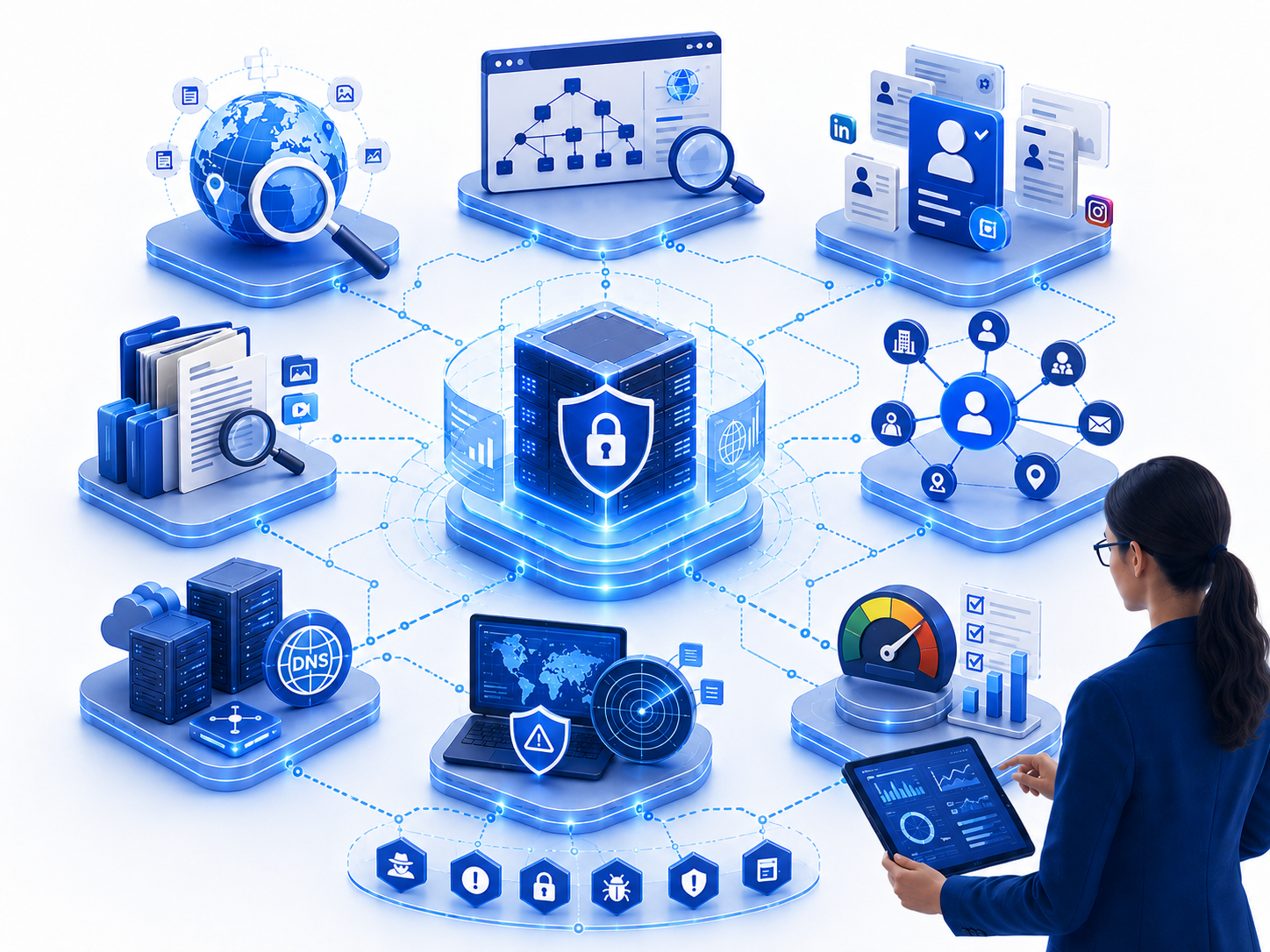
From Digital Footprints to Insight
Reducing Exposure
Organizations continuously expose information through websites, social platforms, public records, repositories, documents, domains, infrastructure, employees, and third-party ecosystems. Individually these signals may appear harmless, but together they can reveal technologies, relationships, operational details, and valuable targeting information.
CliffGuard’s OSINT & Digital Footprint Intelligence Services help enterprises understand what external observers can discover. We collect, validate, enrich, and correlate public information to identify exposure, relationships, reconnaissance opportunities, and intelligence gaps before adversaries exploit them.
Open-Source Intelligence (OSINT) transforms legitimately accessible public information into actionable intelligence. Relevant sources can include websites, social platforms, public records, repositories, technical infrastructure, documents, metadata, forums, and other observable digital sources.
Digital Footprint Intelligence determines what an organization, its people, technologies, brands, and relationships expose externally. Correlating these signals can reveal technology usage, organizational structure, business relationships, sensitive context, and attacker reconnaissance opportunities.
CliffGuard combines source discovery, validation, enrichment, entity resolution, relationship analysis, and analyst-led assessment to separate meaningful intelligence from ordinary public data and identify what should be reduced, monitored, or investigated.
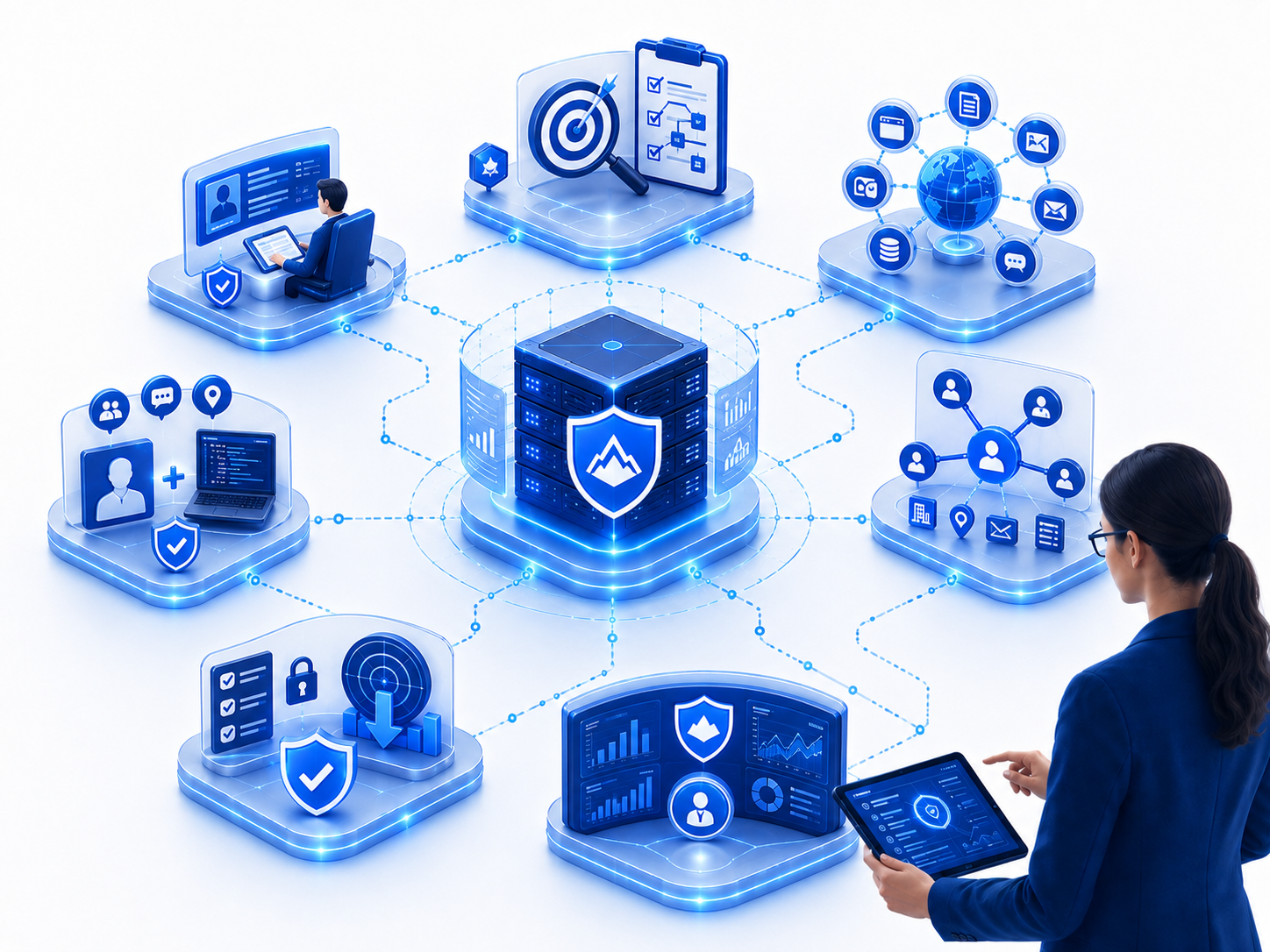
🌐 Digital Footprint Discovery – Identify domains, public assets, technologies, repositories, documents, and organizational exposure.
👤 People & Executive Intelligence – Assess publicly visible identities, roles, relationships, and targeting-relevant information.
🧩 Entity & Relationship Analysis – Connect people, companies, domains, infrastructure, accounts, and associated entities.
📄 Document & Metadata Intelligence – Examine public documents, metadata, identifiers, repositories, and operational context.
🛰️ Infrastructure & Technical OSINT – Analyze domains, DNS, certificates, hosting, technologies, and infrastructure relationships.
Establish intelligence questions, target entities, technologies, geographies, business concerns, and authorized research boundaries. Focus collection on defined objectives instead of gathering unrelated public information.
Research relevant information across public websites, search ecosystems, social platforms, repositories, documents, infrastructure records, media, and other legitimate open sources associated with the intelligence requirement.
Verify sources, remove duplicates, resolve conflicting information, and enrich findings with identity, infrastructure, technology, timeline, and relationship context. Separate current exposure from outdated or misleading information.
Connect isolated observations to uncover relationships, exposure patterns, reconnaissance opportunities, infrastructure associations, and sensitive contextual information that may not be apparent from individual sources.
Deliver prioritized findings through digital footprint assessments, intelligence briefs, relationship analysis, and exposure reports. Recommend practical actions to reduce unnecessary visibility and improve external-risk monitoring.
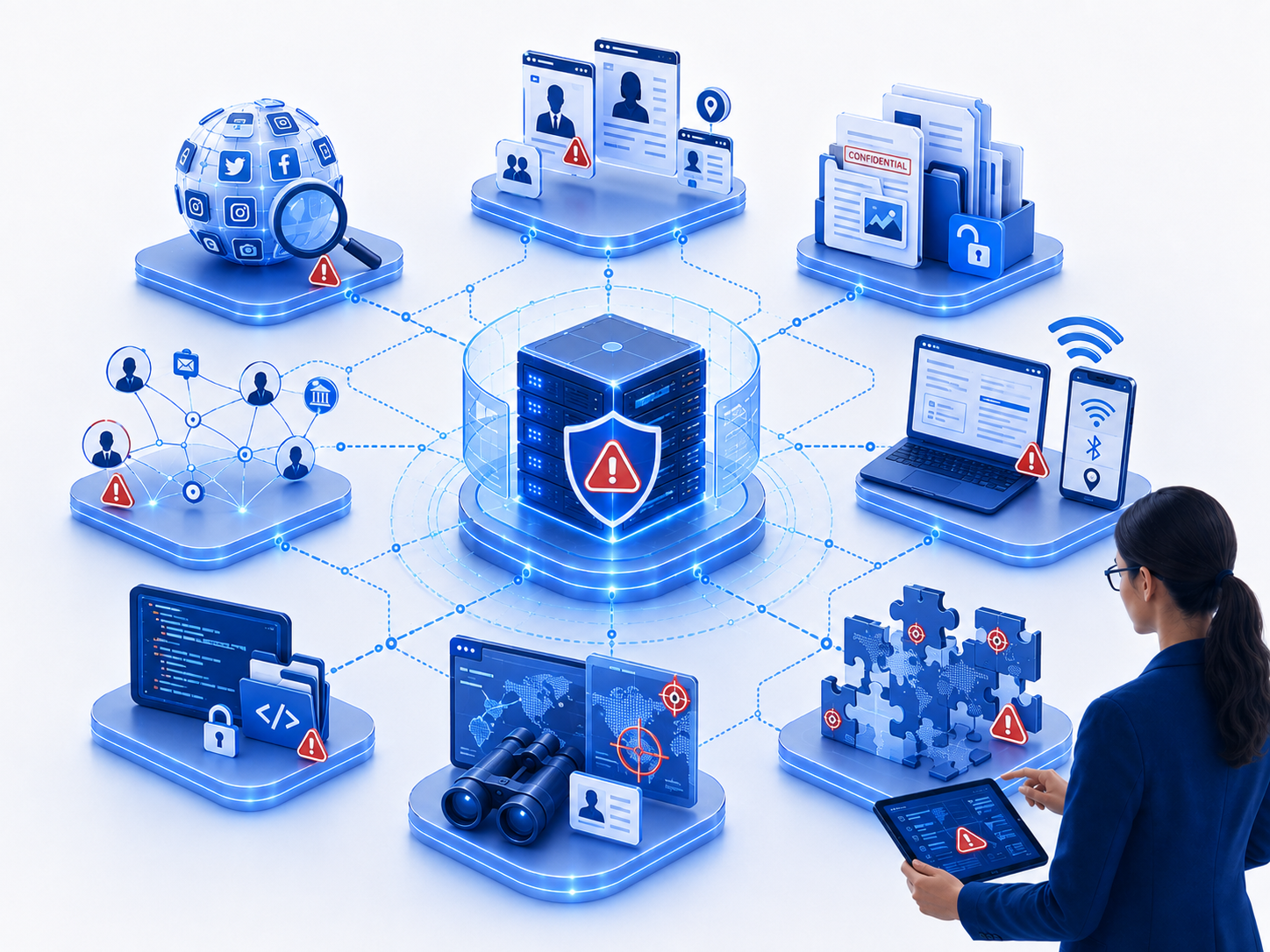
🌐 Excessive Digital Exposure – Identify public information revealing technologies, operations, structure, and sensitive business context.
👤 Employee & Executive Exposure – Surface role-based, personal, professional, and targeting-relevant information involving key personnel.
📄 Sensitive Document Exposure – Detect public documents, metadata, identifiers, internal references, and operational information.
💻 Technology Footprint Disclosure – Reveal software, platforms, infrastructure, development environments, and publicly visible technologies.
🔗 Relationship Exposure – Map suppliers, partners, subsidiaries, employees, domains, and external business relationships.
🧑💻 Repository & Code Exposure – Identify public repositories, development artifacts, configuration clues, and sensitive technical context.
🎯 Reconnaissance Enablement – Identify information attackers could exploit for phishing, impersonation, targeting, or social engineering.
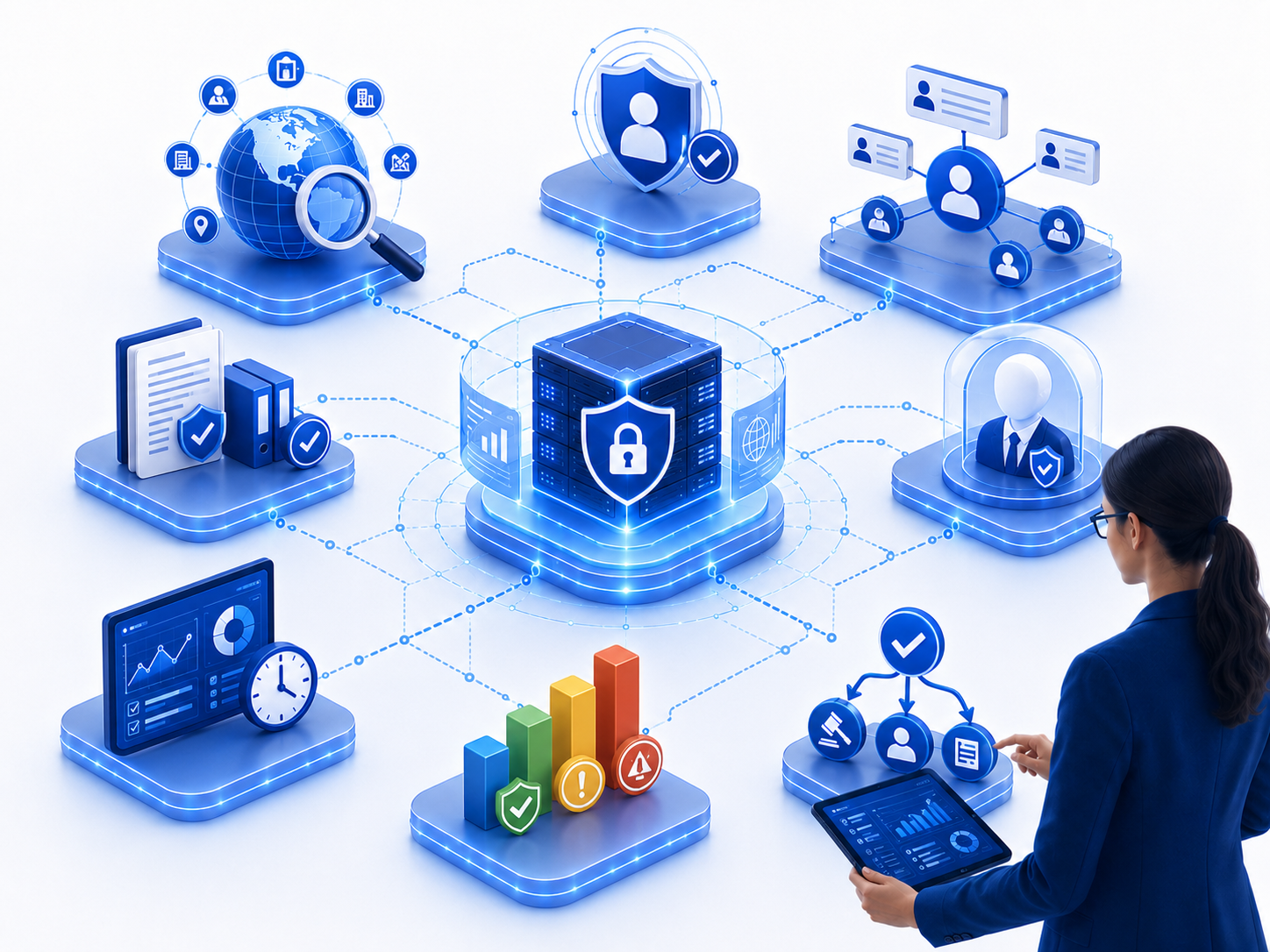
👁️ Greater External Awareness – Understand what outsiders can discover about your organization and people.
🎯 Reduced Targeting Exposure – Limit information that enables reconnaissance, phishing, and social engineering.
🔍 Stronger Intelligence Context – Connect dispersed public signals into meaningful security and risk insights.
🛡️ Improved Executive Protection – Identify public exposure affecting executives and high-value personnel.
⚡ Faster Investigative Decisions – Provide validated external context for security and fraud investigations.
📊 Better Risk Prioritization – Focus remediation on exposure with genuine enterprise relevance.
They analyze legitimately accessible public information to identify organizational exposure, relationships, infrastructure, technologies, identities, and intelligence relevant to cyber risk.
Research can include websites, search platforms, public records, social sources, repositories, documents, infrastructure records, metadata, media, and other openly accessible sources.
OSINT primarily examines publicly accessible information, while Dark Web Intelligence focuses on underground and cybercrime ecosystems. The two can complement each other but use different collection approaches.
Attack Surface Intelligence focuses on internet-facing technical assets and exposure. Digital Footprint Intelligence also examines people, relationships, documents, public information, and organizational context.
Yes. Analysis may uncover technology clues, organizational details, employee information, public documents, infrastructure associations, and targeting context useful for reconnaissance or social engineering.
We use source validation, corroboration, entity resolution, timeline analysis, contextual review, and confidence assessment before treating observations as actionable intelligence.
Deliverables may include digital footprint assessments, exposure findings, entity maps, technical OSINT, executive intelligence, targeting risks, remediation priorities, and intelligence briefs.
CliffGuard combines OSINT research, digital footprint discovery, technical intelligence, entity analysis, and exposure assessment to reveal what outsiders can discover, identify meaningful risk, and help security leaders reduce unnecessary public exposure.
See your organization from an external perspective. CliffGuard connects public information, people, infrastructure, technologies, documents, and relationships to uncover hidden exposure, strengthen investigations, and provide intelligence security teams can act on.