











Designed to protect what matters
before threats strike.
Effective cybersecurity requires more than individual technologies and isolated security controls. Organizations need clearly defined policies, standards, procedures, and governance structures that translate business risk, regulatory obligations, and security objectives into consistent enterprise-wide practices.
CliffGuard’s Policy & Control Framework Development Services help organizations design, modernize, and implement practical cybersecurity policies and risk-based security control frameworks. We align governance documentation with business priorities, regulatory requirements, and recognized standards to strengthen accountability, improve audit readiness, and support a mature cybersecurity program.
Security Policy Development defines the rules, responsibilities, principles, and expectations that guide cybersecurity decisions and employee behavior across an organization.
Control Framework Development translates security, regulatory, contractual, and business requirements into structured, measurable controls with clear ownership and implementation expectations.
CliffGuard combines policy architecture, control design, framework mapping, ownership models, implementation guidance, and governance processes to build usable security documentation—not shelfware.

📚 Cybersecurity Policy Development – Create clear policies covering governance, access, data, operations, resilience, and security responsibilities.
🛡️ Security Control Framework Design – Build risk-based control libraries with ownership, objectives, evidence, and implementation guidance.
📋 Standards & Procedure Development – Translate policy requirements into practical standards, procedures, baselines, and operating instructions.
⚖️ Framework & Regulatory Mapping – Align controls with ISO 27001, NIST, CIS Controls, PCI DSS, SOC 2, and applicable regulations.
👥 Roles, Ownership & Accountability – Define control owners, approvers, responsibilities, review cycles, and escalation paths.
🔄 Policy Governance & Maintenance – Manage approvals, exceptions, updates, versioning, reviews, and continuous improvement.
Evaluate the organization’s business model, technology environment, risk profile, regulatory obligations, contractual commitments, and existing governance documentation. This establishes a clear baseline for developing policies and controls that reflect actual business and security requirements.
Identify the most relevant cybersecurity and compliance frameworks for the organization, including ISO/IEC 27001, NIST CSF, CIS Controls, PCI DSS, SOC 2, GDPR, and HIPAA. Requirements are mapped and consolidated to create a unified control structure without unnecessary duplication.
Design a structured hierarchy covering policies, standards, procedures, guidelines, control statements, and supporting records. The architecture defines how each document relates to the wider governance program and ensures consistency across business units.
Develop clear, enforceable, and business-aligned policies covering information security, access control, data protection, cloud security, incident response, vulnerability management, third-party risk, acceptable use, business continuity, and other priority areas.
Define the administrative, technical, physical, and operational controls required to enforce each policy. Control objectives, owners, implementation responsibilities, monitoring requirements, evidence expectations, and review frequencies are documented.
Review policies and controls with executive leadership, information security, IT, legal, compliance, privacy, human resources, and relevant business owners. This ensures the framework is practical, legally appropriate, operationally achievable, and formally approved.
Support policy publication, employee communication, awareness activities, control implementation, exception management, and integration into operational processes. This helps move the framework from documentation into consistent enterprise-wide practice.
Establish periodic reviews, control testing, compliance monitoring, policy exceptions, performance metrics, and governance reporting. Policies and controls are continuously updated to reflect regulatory changes, emerging threats, business transformation, and new technologies.
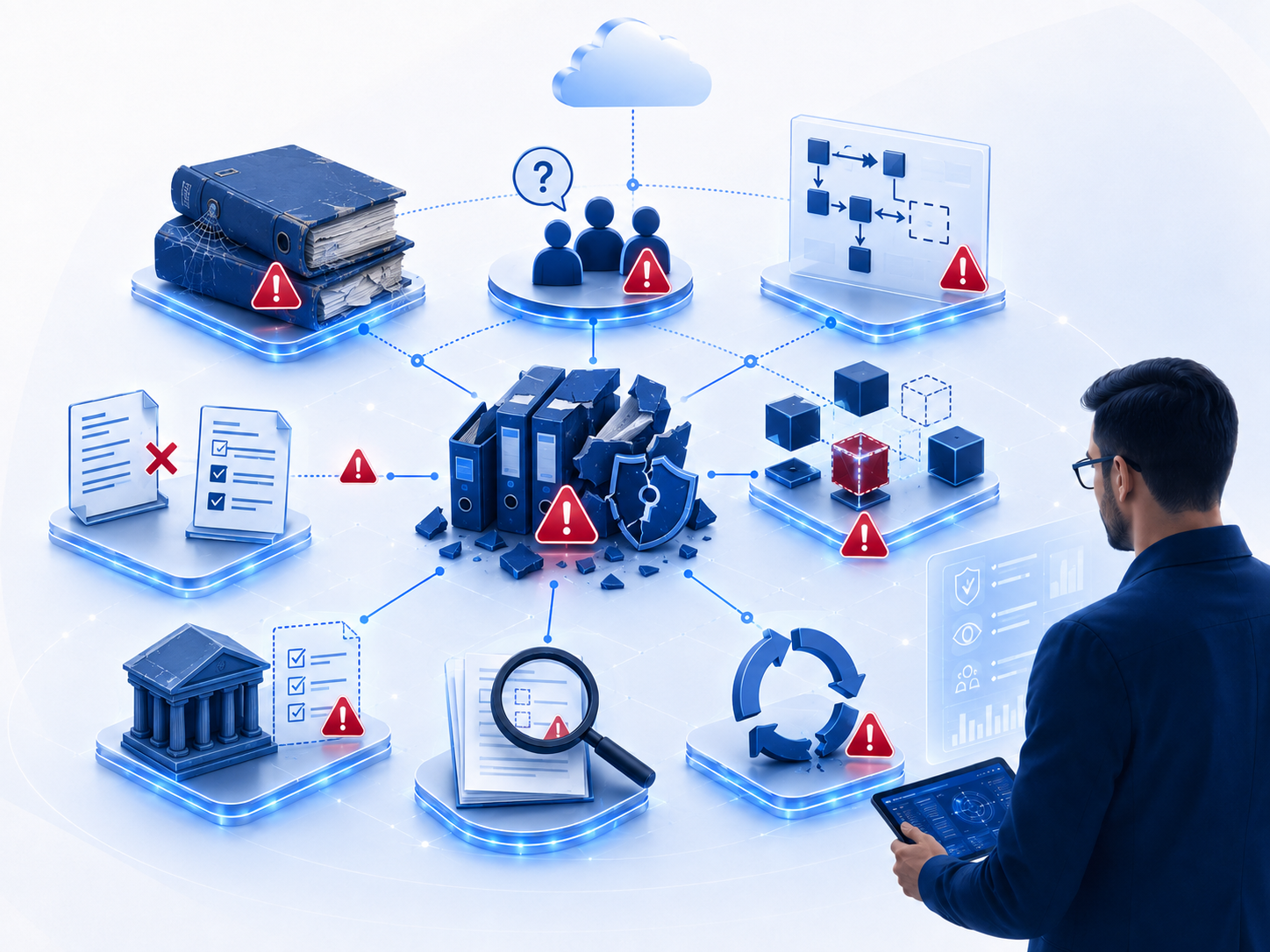
📚 Outdated Security Policies – Identify documents that no longer reflect technologies, threats, regulations, or business operations.
🧭 Unclear Policy Ownership – Resolve undefined accountability, weak approvals, inconsistent reviews, and fragmented decision-making.
🛡️ Control Design Gaps – Detect missing, duplicated, ineffective, or poorly defined controls across security domains.
📋 Policy-to-Control Misalignment – Identify requirements that are not translated into measurable, operational security controls.
⚙️ Inconsistent Implementation – Address different interpretations, uneven enforcement, weak procedures, and inconsistent security practices.
⚖️ Regulatory Mapping Gaps – Identify controls that do not adequately address applicable legal, contractual, or framework requirements.
📂 Weak Evidence Requirements – Correct unclear evidence expectations, poor traceability, and unsupported control implementation.
🔄 Poor Policy Maintenance – Replace outdated review cycles with structured updates, ownership, versioning, and continuous governance.
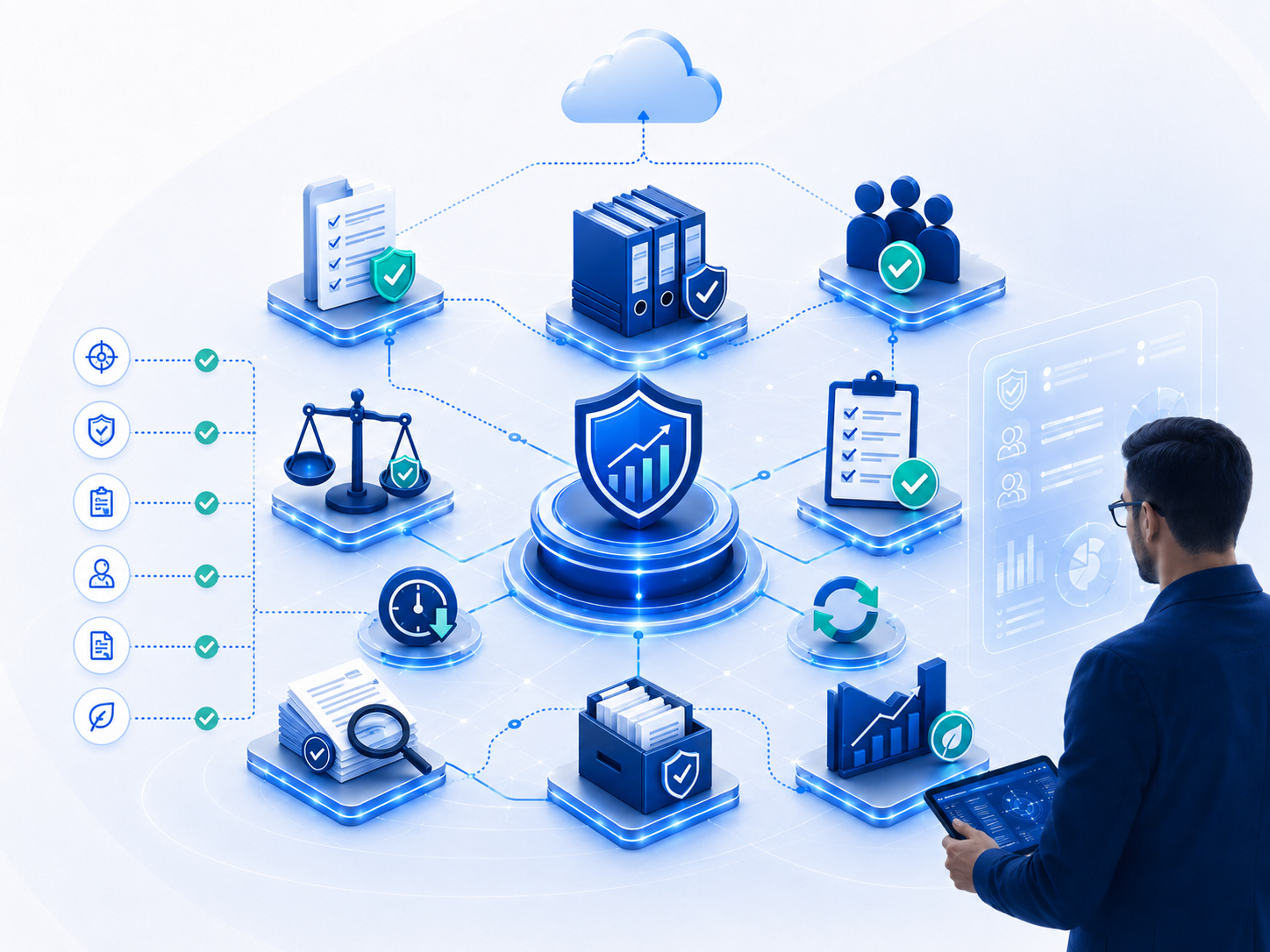
🛡️ Consistent Security Practices – Standardize how security requirements are implemented across teams and environments.
👤 Clear Accountability – Define ownership, responsibilities, approvals, evidence expectations, and escalation paths.
📋 Improved Audit Readiness – Maintain structured documentation and control evidence for audit readiness.
📋 Framework-Aligned Governance – Aligned with ISO 27001, NIST CSF, CIS Controls, PCI DSS, SOC 2, GDPR, HIPAA, and more.
⚙️ Operational Efficiency – Reduce duplicated controls, conflicting instructions, and inconsistent security practices.
A cybersecurity policy and control framework defines the rules, responsibilities, standards, procedures, and security controls an organization uses to manage cyber risk, protect information assets, and meet regulatory requirements.
Formal security policies establish consistent expectations, clarify accountability, support regulatory compliance, and guide employees and technology teams in protecting systems, data, and business operations.
CliffGuard can develop information security, access control, acceptable use, data protection, cloud security, incident response, vulnerability management, third-party risk, business continuity, remote working, and other enterprise cybersecurity policies.
We align policies and controls with ISO/IEC 27001, NIST Cybersecurity Framework, CIS Controls, PCI DSS, SOC 2, GDPR, HIPAA, and other industry-specific standards and regulatory requirements.
Yes. We assess existing documentation, identify policy and control gaps, remove duplication, modernize outdated requirements, and align the framework with current business, technology, and compliance needs.
Cybersecurity policies should generally be reviewed at least annually and whenever significant regulatory, technological, organizational, or threat-related changes occur.
CliffGuard combines cybersecurity governance expertise, risk-based methodologies, framework knowledge, and business-focused advisory to create policies and controls that are practical, enforceable, audit-ready, and aligned with enterprise objectives.
Security policies should do more than satisfy an audit requirement. CliffGuard helps organizations build practical policies and control frameworks that guide decision-making, strengthen accountability, standardize security practices, and support measurable risk reduction.
Strong security begins with effective governance. CliffGuard helps organizations develop practical security policies and control frameworks that standardize security practices, strengthen compliance, reduce organizational risk, and support long-term cyber resilience across the enterprise.