










Smarter, Deeper, Stronger:
The CliffGuard Approach
Organizations invest in EDR, SIEM, identity controls, cloud security, network defenses, and SOC operations, yet untested detections and response processes can leave critical attack techniques unnoticed.
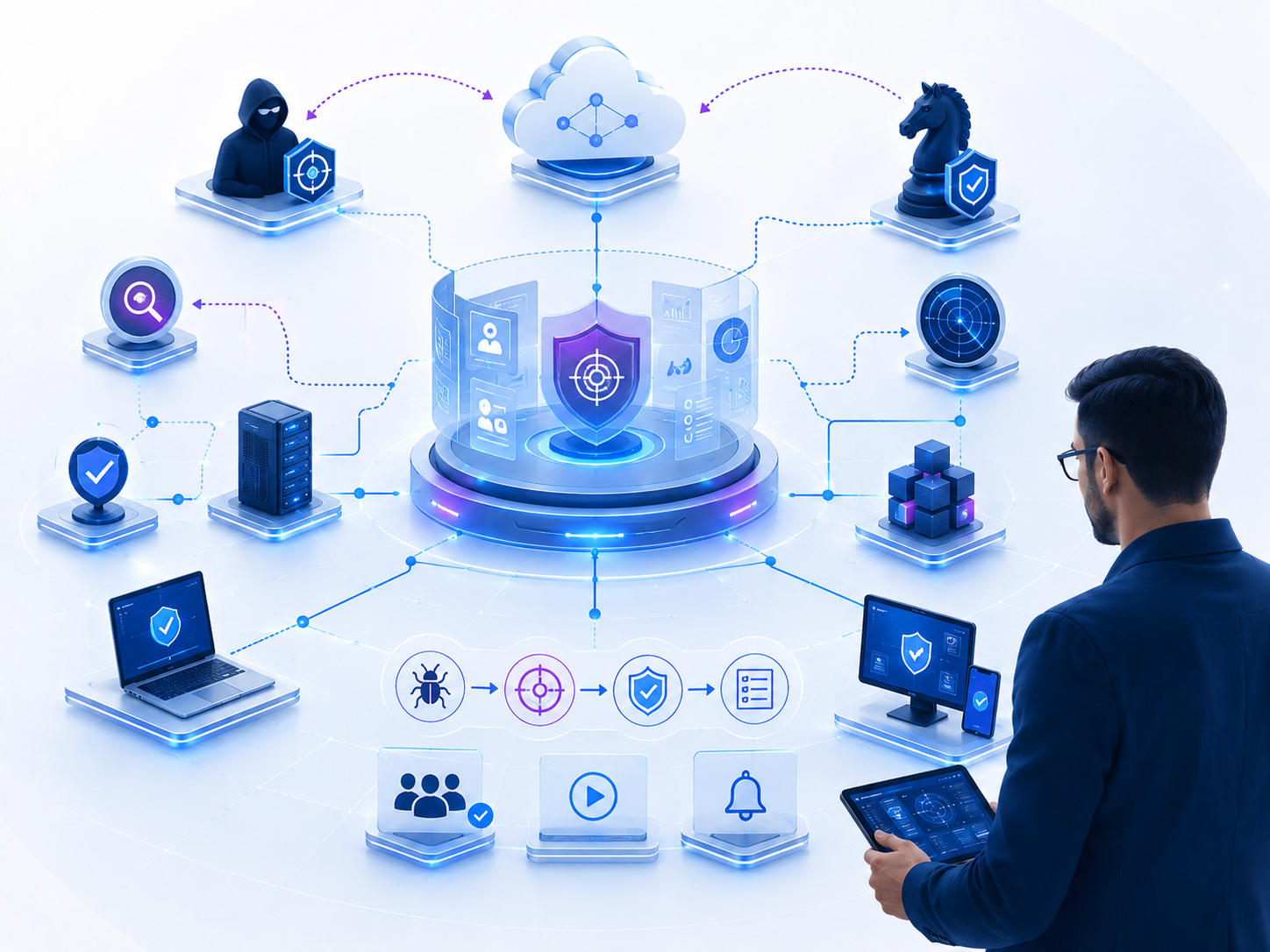
CliffGuard’s Purple Team Exercises bring offensive and defensive teams together to simulate realistic attacks, validate security controls, improve detection coverage, and strengthen enterprise response capabilities.
Purple Team Exercises combine red-team attack techniques with blue-team defensive validation to improve security detection, prevention, investigation, and response capabilities.
Exercises test endpoints, identities, networks, applications, cloud environments, and security monitoring using controlled adversary scenarios aligned with enterprise threat priorities.
CliffGuard combines adversary simulation, MITRE ATT&CK mapping, detection engineering, control validation, and remediation testing to strengthen measurable defensive performance.
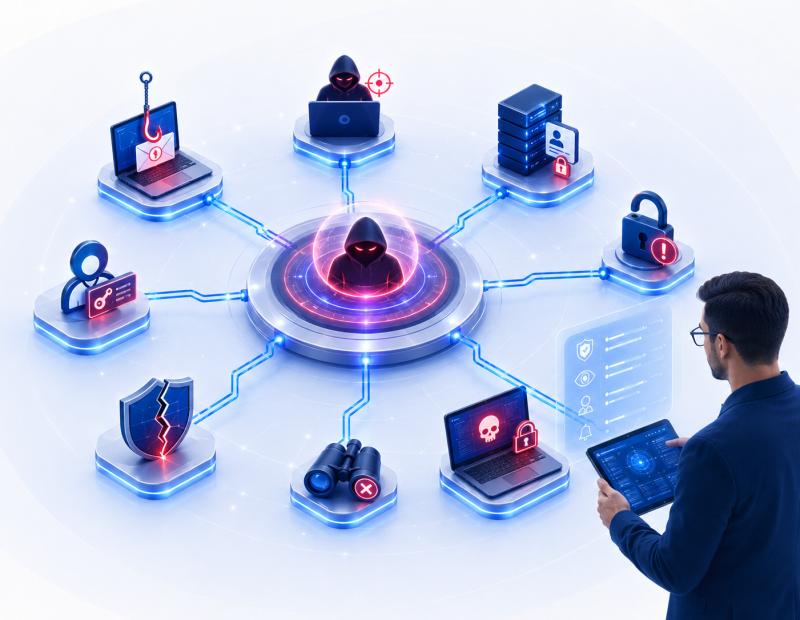
🎯 Adversary Technique Simulation – Execute realistic attack techniques covering access, persistence, escalation, movement, and objective actions.
👁️ Detection & Alert Validation – Test telemetry, SIEM rules, EDR detections, correlations, alerts, and analyst visibility.
🛡️ Security Control Validation – Assess endpoint, network, identity, email, cloud, and application defensive controls.
🔐 Identity & Attack Path Testing – Validate credential attacks, privilege escalation, trust abuse, and lateral movement.
🧪 Detection Engineering & Tuning – Improve rules, analytics, alerts, coverage, thresholds, and detection logic.
🔄 Continuous Purple Team Validation – Retest controls, validate remediation, measure coverage, and track defensive improvement.
Define critical assets, threat scenarios, authorized techniques, defensive tools, success criteria, testing boundaries, operational restrictions, and communication procedures.
Select relevant MITRE ATT&CK tactics and techniques based on threat intelligence, previous incidents, control gaps, business priorities, and environmental exposure.
Safely execute approved attack techniques across identities, endpoints, networks, applications, and cloud services while capturing expected telemetry and control responses.
Observe alerts, investigate events, trace attack progression, test escalation procedures, and measure whether defensive teams can identify and contain simulated activity.
Improve logging, detection rules, behavioral analytics, investigation workflows, and response playbooks. Re-execute techniques to confirm measurable security improvement.
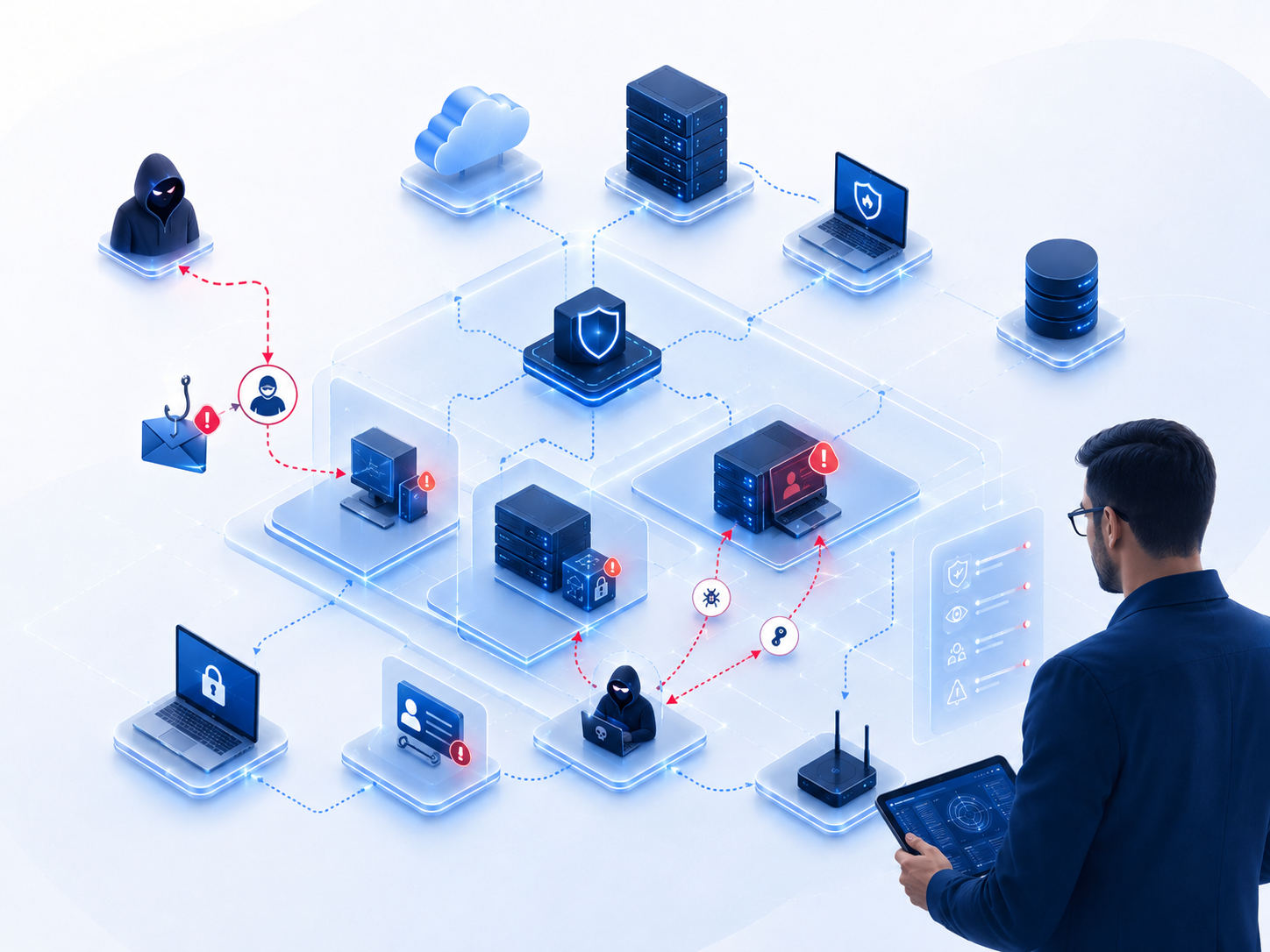
🚨 Missing Attack Detections – Identify attacker behaviors that bypass existing SIEM, EDR, XDR, identity, network, or cloud rules.
📉 Incomplete Telemetry – Expose missing logs, weak sensors, incorrect configurations, and insufficient investigation evidence.
🔔 Low-Quality Alerts – Detect noisy, duplicated, poorly prioritized, or context-deficient alerts that delay analyst action.
🔗 Unseen Attack Progression – Reveal gaps across initial access, credential abuse, persistence, privilege escalation, and lateral movement.
🔐 Identity & Cloud Blind Spots – Identify weak visibility into authentication abuse, risky permissions, tokens, workloads, and control-plane activity.
🧭 Investigation Workflow Failures – Expose missing enrichment, unclear ownership, weak escalation, and incomplete attack-path reconstruction.
⏱️ Delayed Containment & Response – Identify slow decision-making, ineffective playbooks, communication gaps, and containment weaknesses.

🚨 Validated Detection Coverage – Validate security controls against attacker behaviors across complete attack chains.
🎯 Improved Alert Accuracy – Reduce false positives while increasing detection quality, context, and prioritization.
🛡️ Stronger Security Controls – Validate and improve endpoint, identity, network, cloud, email, and monitoring technologies.
🚨 Faster Incident Response – Strengthen analyst triage, investigation, escalation, containment, and decision-making.
🔍 Greater Attack Visibility – Improve telemetry and correlation across identities, systems, applications, and cloud environments.
A Purple Team Exercise is a collaborative assessment where offensive specialists execute realistic attack techniques while defensive teams observe, detect, investigate, and respond to the activity.
Red teaming tests whether attackers can achieve objectives without defender awareness. Purple teaming emphasizes collaboration, detection validation, control tuning, knowledge sharing, and measurable defensive improvement.
Exercises can validate SIEM, EDR, XDR, IAM, email security, cloud monitoring, network detection, SOAR, logging platforms, and incident-response processes.
Yes. CliffGuard maps approved scenarios, attack techniques, detections, telemetry, and defensive gaps to the MITRE ATT&CK framework.
Yes. Purple team exercises evaluate SOC alert triage, investigation, escalation, communication, containment, evidence collection, and response procedures.
Deliverables include technique coverage, attack evidence, telemetry findings, detection results, control gaps, tuned rules, response observations, metrics, and a prioritized improvement roadmap.
CliffGuard combines adversary emulation, detection engineering, MITRE ATT&CK expertise, SOC validation, and collaborative security improvement to deliver technically rigorous and measurable purple team exercises.
Purple teaming transforms isolated security testing into continuous defensive improvement. CliffGuard combines controlled attack emulation, detection engineering, SOC collaboration, and response validation to identify control gaps and strengthen performance against realistic adversary behavior.
Gain measurable insight into defensive effectiveness. CliffGuard validates detections, identifies control gaps, improves SOC visibility, and strengthens response against realistic adversary techniques.