










🔐 Simulating Hackers
Strengthening Defenses.
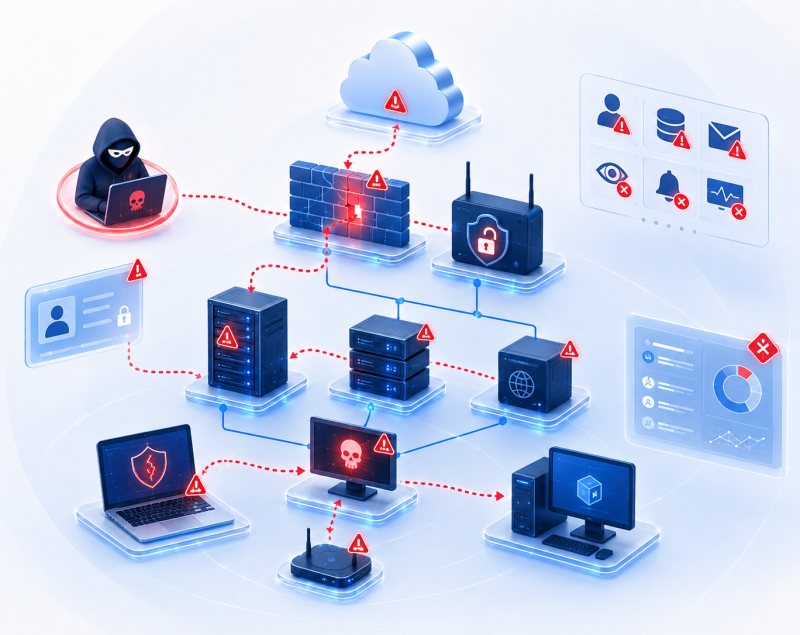
Organizations invest heavily in people, processes, security technologies, and monitoring, yet determined attackers can exploit weaknesses across identities, applications, networks, cloud environments, physical controls, and human behavior to reach critical assets.
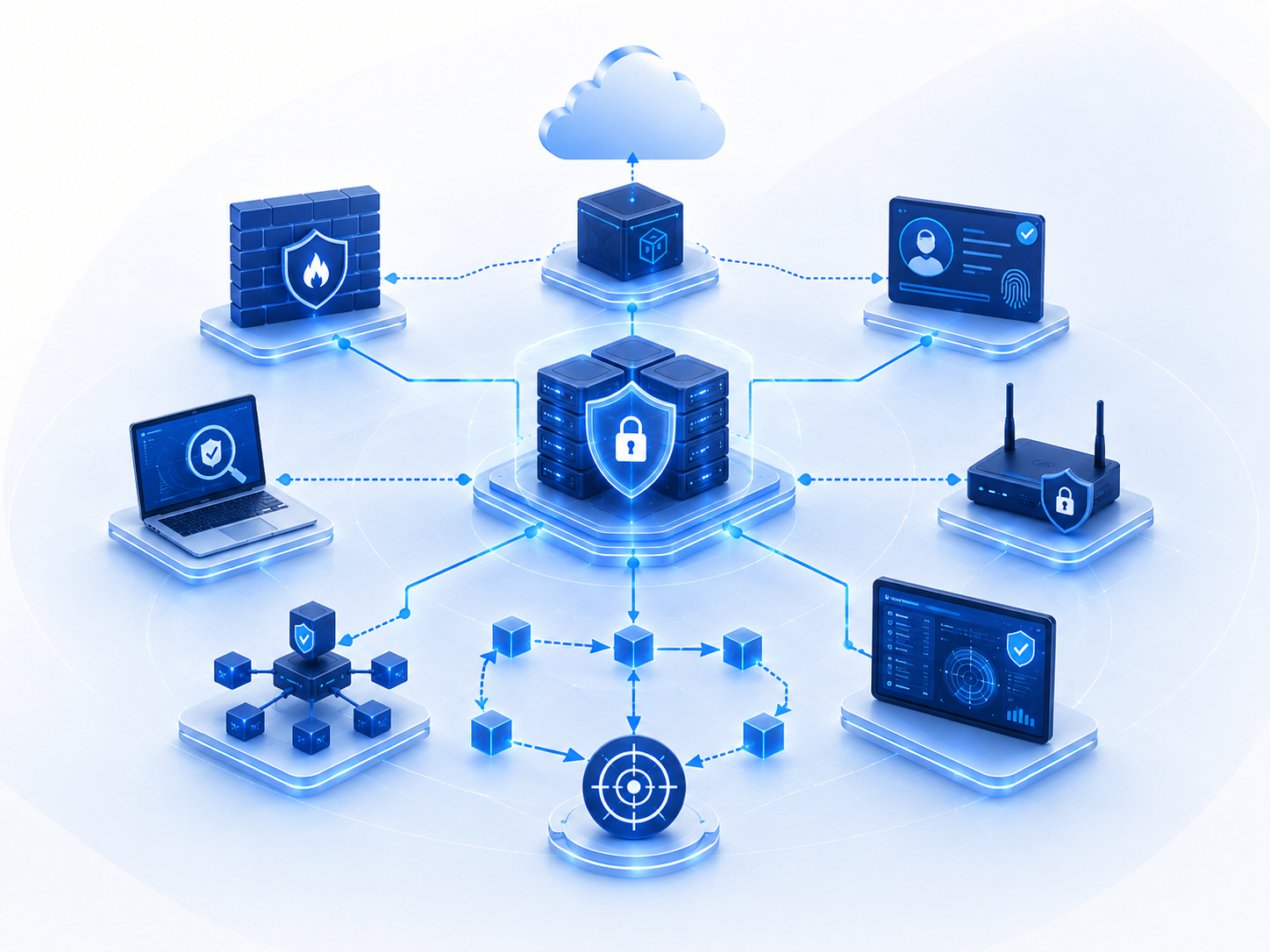
CliffGuard’s Red Team Assessment Services simulate realistic adversary campaigns to test preventive, detective, and response capabilities, expose attack paths, validate security investments, and measure how effectively teams withstand sophisticated cyber attacks.
A Red Team Assessment is an objective-driven security exercise that emulates realistic adversaries to determine whether attackers can bypass defenses and achieve defined business-impact objectives.
Testing can combine external intrusion, identity attacks, social engineering, cloud compromise, application exploitation, lateral movement, privilege escalation, and persistence within authorized engagement boundaries.
CliffGuard applies threat-informed attack simulation, MITRE ATT&CK-aligned techniques, controlled exploitation, and detection validation to uncover systemic weaknesses that conventional vulnerability assessments may miss.

🎭 Threat-Informed Adversary Emulation – Develop realistic attack scenarios around relevant threat actors, objectives, assets, and business exposure.
🌐 External Attack & Initial Access – Test internet-facing systems, applications, exposed services, credentials, phishing paths, and remote access.
🔐 Identity, Endpoint & Privilege Testing – Validate account compromise, token abuse, endpoint bypass, credential access, and privilege escalation.
🔗 Internal, Cloud & Hybrid Attack Paths – Test segmentation, lateral movement, federation, workloads, SaaS access, and cross-environment trust.
👥 Human & Physical Security Testing – Assess approved social engineering, employee verification, facility access, and security-process weaknesses.
🚨 Detection & Response Validation – Evaluate SIEM, EDR, identity monitoring, SOC investigation, containment, escalation, and incident coordination.
Define the business objectives, target assets, authorized attack vectors, testing boundaries, escalation procedures, communication protocols, and operational restrictions. Establish clear rules of engagement to ensure controlled and safe execution.
Gather authorized intelligence about employees, domains, applications, cloud services, exposed infrastructure, technologies, third parties, and identity systems. Identify realistic entry points and develop attack scenarios aligned with the agreed objectives.
Simulate approved techniques such as social engineering, exposed-service exploitation, application attacks, credential abuse, cloud misconfigurations, and remote-access weaknesses to determine whether an initial foothold can be established.
Test credential access, privilege escalation, persistence, trust abuse, segmentation bypass, and lateral movement across systems and environments. Assess whether the simulated attacker can progress toward critical assets without detection.
Validate whether agreed objectives were achieved and evaluate how security controls and teams responded. Deliver a detailed attack narrative, detection analysis, control findings, business impact, and prioritized improvement roadmap.
🌐 Unknown External Attack Paths – Reveal exposed services, weak applications, leaked credentials, and overlooked initial-access opportunities.
🔐 Identity Compromise – Validate password attacks, token theft, session abuse, excessive privileges, and weak identity controls.
⬆️ Privilege Escalation – Identify pathways that allow compromised users or systems to gain administrative access.
🔗 Segmentation & Lateral Movement Failures – Expose weak boundaries, trusted relationships, remote services, and uncontrolled internal movement.
☁️ Cloud & SaaS Trust Abuse – Validate federation weaknesses, risky permissions, service accounts, workloads, and cross-environment access.
🥷 Persistence & Defensive Evasion – Assess whether attackers can bypass controls, remain undetected, and maintain simulated access.
💎 Critical Asset & Data Exposure – Determine whether attackers could reach sensitive systems, regulated information, or essential business services.
🚨 Detection & Response Gaps – Reveal missing telemetry, ineffective alerts, delayed investigation, weak containment, and coordination failures.

🎯 Realistic Risk Validation – Understand how sophisticated attackers could target critical assets and business operations.
🛡️ Stronger Security Controls – Validate and improve preventive, detective, and responsive controls across the enterprise.
📊 Improved Detection Coverage – Identify monitoring gaps, missed attack techniques, weak alerts, and visibility limitations.
🚨 Faster Incident Response – Strengthen investigation, containment, escalation, communication, and processes.
👥 Greater Workforce Resilience – Measure employee readiness against phishing, impersonation, and social-engineering attacks.
A Red Team Assessment is an authorized, objective-driven simulation of realistic cyberattacks across people, processes, and technology. It evaluates whether an organization can prevent, detect, investigate, and respond to sophisticated adversary activity.
Penetration testing focuses primarily on identifying and validating vulnerabilities within a defined scope. Red teaming uses multiple attack vectors to achieve specific objectives while testing security controls, employee awareness, detection capabilities, and incident response.
Depending on authorization and scope, testing may include external reconnaissance, phishing, social engineering, credential attacks, application exploitation, cloud and identity attacks, privilege escalation, persistence, lateral movement, and security-control evasion.
Yes. Authorized phishing and social-engineering scenarios can be included to evaluate employee behavior, email-security controls, authentication protections, reporting procedures, and security-team response.
Exercises are carefully planned under agreed rules of engagement. Testing boundaries, restricted systems, communication procedures, and escalation paths are defined in advance to protect safety, availability, and business continuity.
Deliverables include an executive summary, detailed attack narrative, objectives achieved, techniques used, evidence, detection gaps, control weaknesses, business impact, remediation priorities, and a strategic security-improvement roadmap.
CliffGuard combines manual-first adversary emulation, social engineering, identity attacks, cloud and network exploitation, lateral-movement testing, detection validation, and purple-team collaboration to deliver realistic, controlled, and business-focused red team assessments.
Red teaming demonstrates how attackers could combine weaknesses across technology, identities, and people. CliffGuard converts realistic adversary emulation, attack-path evidence, and defensive gaps into prioritized security improvements.
Understand how enterprise defenses perform against realistic adversaries. CliffGuard exposes attack paths, validates detection and response capabilities, prioritizes remediation, and helps strengthen measurable cyber resilience.