











From Automation to Optimization
Strengthening SOC Performance
Enterprise SOC teams often manage high alert volumes, repetitive investigations, fragmented tools, manual escalation, and inconsistent response workflows. These inefficiencies consume analyst capacity, increase response time, and make it harder to focus on high-impact threats.
CliffGuard’s SOAR Automation & SOC Optimization Services streamline security operations through orchestration, automated playbooks, enrichment, case management, workflow engineering, and performance optimization—helping SOC teams respond faster while maintaining appropriate human oversight.
Security Orchestration, Automation and Response (SOAR) connects security technologies, data, workflows, and response actions to automate repeatable security operations while coordinating analyst-driven decisions.
SOC Optimization improves the effectiveness of people, processes, technologies, detections, workflows, escalation models, and performance metrics to reduce operational friction and strengthen security outcomes.
CliffGuard aligns SOAR and SOC optimization with CISA SIEM/SOAR implementation guidance, NIST CSF 2.0, NIST SP 800-61 Rev. 3, and MITRE ATT&CK-informed detection and response practices. CISA published dedicated SIEM/SOAR implementation guidance in 2025, while NIST integrates incident response across Detect, Respond, and Recover.
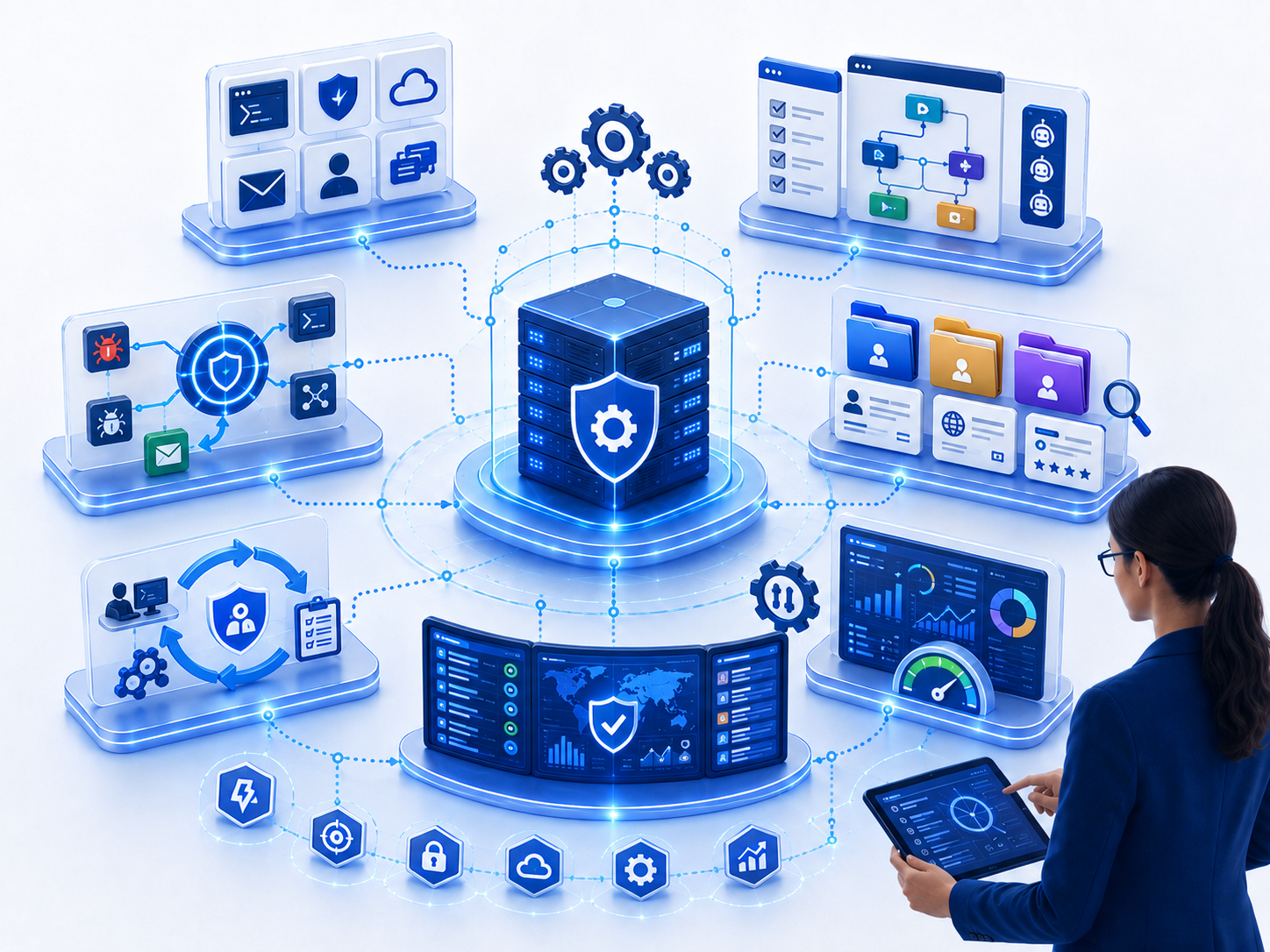
🔗 Security Tool Orchestration – Integrate SIEM, EDR/XDR, identity, cloud, email, ticketing, and security platforms.
⚙️ Playbook & Workflow Automation – Automate enrichment, triage, escalation, containment, notifications, and repetitive analyst tasks.
🚨 Automated Incident Response – Coordinate approved blocking, isolation, access restriction, and response actions with governance controls.
🧠 Case Management & Enrichment – Consolidate alerts, threat context, evidence, ownership, investigations, and response activities.
📊 SOC Process Optimization – Improve operating models, escalation paths, analyst workflows, SLAs, queues, and response consistency.
🔄 Automation Tuning & Metrics – Measure playbook performance, remove bottlenecks, optimize workflows, and expand automation safely.
Evaluate SOC workflows, alert volumes, analyst effort, response delays, tool integrations, escalation paths, and automation readiness. Prioritize high-volume, repeatable, low-risk processes where automation can deliver measurable operational value.
Connect supported SIEM, EDR/XDR, identity, cloud, email, threat intelligence, ticketing, and communication systems through APIs and native integrations. Establish reliable data exchange, permissions, authentication, and orchestration dependencies.
Design playbooks with defined triggers, enrichment steps, decision logic, approval gates, exception handling, ownership, and auditability. Apply human-in-the-loop controls where business impact or response risk requires analyst authorization.
Execute validated workflows for alert enrichment, triage, case creation, escalation, notification, and approved containment actions. Coordinate automated response with analysts and established incident-handling procedures aligned to NIST response practices.
Track automation success, failure rates, analyst touchpoints, response times, workflow bottlenecks, and operational outcomes. Tune playbooks, remove unnecessary steps, expand proven automation, and continuously improve SOC effectiveness.
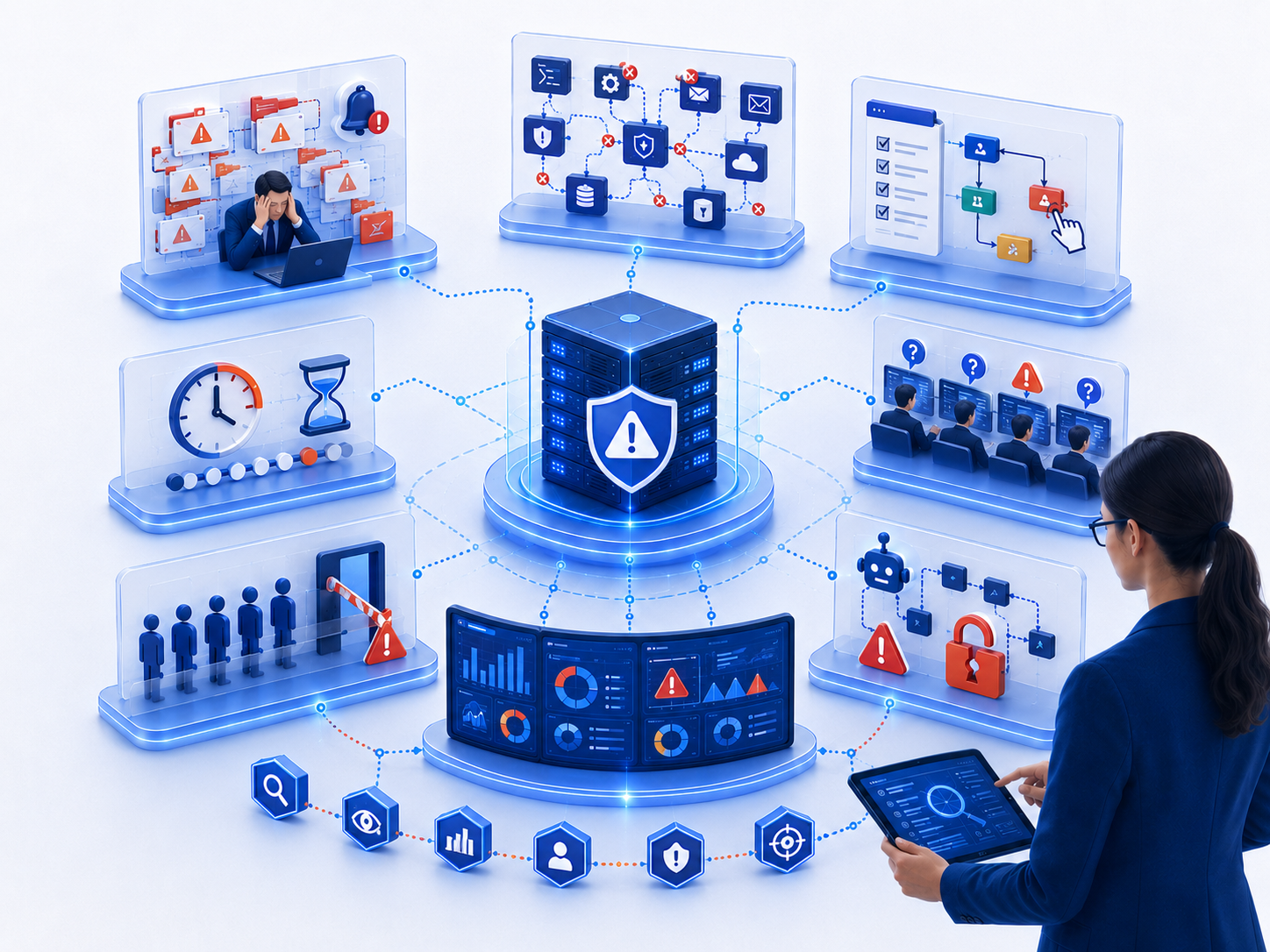
🚨 Alert Overload – Reduce repetitive alerts, manual triage, queue congestion, and analyst fatigue.
⏱️ Slow Response Workflows – Eliminate unnecessary delays across enrichment, escalation, approval, and containment.
🔗 Fragmented Security Tools – Connect disconnected platforms, data sources, workflows, and response actions.
⚙️ Manual SOC Processes – Reduce repetitive tasks, inconsistent execution, and avoidable analyst effort.
📋 Inconsistent Response – Standardize investigation, escalation, containment, communication, and case-handling procedures.
🧩 Workflow Bottlenecks – Identify approval delays, handoff failures, duplicated effort, and inefficient processes.
🤖 Unsafe Automation – Prevent uncontrolled actions through validation, approval gates, permissions, and exception handling.

⏱️ Faster Security Response – Accelerate enrichment, triage, escalation, containment, and analyst decision-making.
⚙️ Greater SOC Efficiency – Reduce repetitive workload and increase analyst capacity for higher-value investigations.
🎯 Improved Response Consistency – Standardize security workflows, decisions, escalation, and approved response actions.
🔗 Stronger Tool Utilization – Connect existing security investments into coordinated detection and response workflows.
📊 Measurable SOC Performance – Track automation, response times, workload, bottlenecks, and improvements.
They integrate security tools and automate triage, enrichment, escalation, case management, response workflows, and repetitive SOC activities while improving operational performance.
High-volume, repeatable, well-understood processes such as alert enrichment, case creation, threat-intelligence lookup, notifications, and approved response actions are strong candidates.
Yes. Supported integrations can connect SIEM, EDR/XDR, identity, cloud, email, ticketing, threat intelligence, and communication platforms through available APIs or connectors.
CliffGuard designs workflows with approval gates, permissions, validation, exception handling, audit trails, and human authorization for higher-risk response actions.
SOAR removes repetitive enrichment, routing, documentation, and response steps, allowing analysts to spend more time on investigation, threat analysis, and decision-making.
Organizations can track automation success, analyst touchpoints, response times, workflow volume, bottlenecks, escalation performance, and operational outcomes to measure improvement.
Programs can align with CISA SIEM/SOAR implementation guidance, NIST CSF 2.0, NIST SP 800-61 Rev. 3, and MITRE ATT&CK detection practices.
CliffGuard combines SOAR engineering, security orchestration, response automation, workflow optimization, and SOC performance improvement to reduce manual effort, accelerate security decisions, standardize response, and help analysts focus on threats that require human expertise.
Transform fragmented security processes into coordinated workflows. CliffGuard automates repetitive tasks, connects security technologies, improves response consistency, and continuously optimizes SOC operations for faster decisions and stronger security outcomes.