










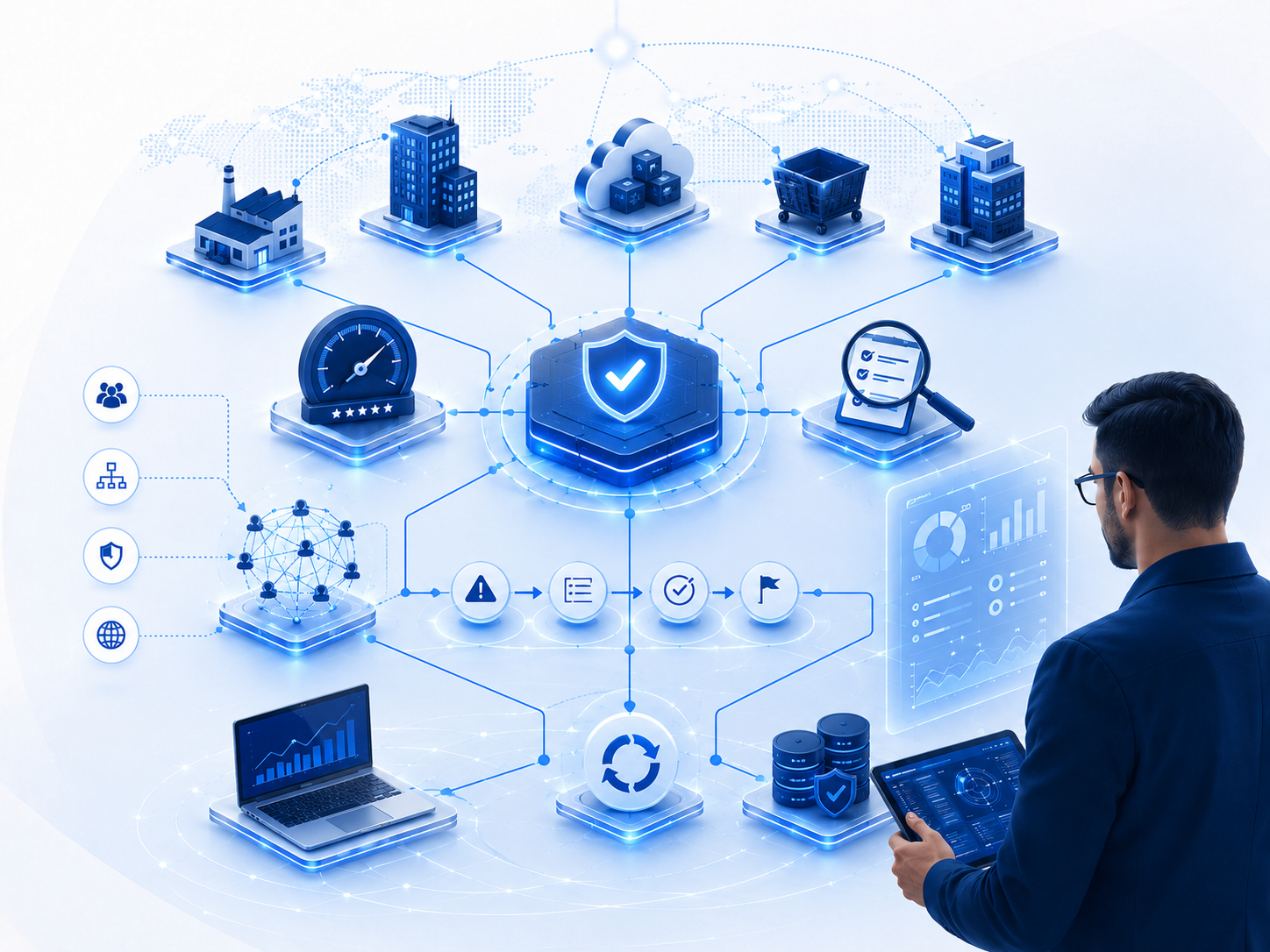
Designed to protect what matters
before threats strike.
Organizations depend on vendors, cloud providers, suppliers and service partners to support operations. Weak due diligence, limited visibility, unclear ownership, and unmanaged dependencies can expose data, disrupt services, and increase regulatory and operational risk.
CliffGuard’s Third-Party & Supply Chain Risk Services evaluate vendor security, contractual controls, concentration risk, data access, operational dependencies, and ongoing monitoring. We help organizations identify external exposure, prioritize suppliers, and build risk-management programs that strengthen enterprise resilience.
Third-Party Risk Management identifies and manages cybersecurity, operational, privacy, compliance, and resilience risks introduced by vendors and service providers.
Supply Chain Risk Management evaluates dependencies across technology, software, infrastructure, logistics, data, and service ecosystems that could affect business operations.
CliffGuard combines vendor assessments, risk tiering, contract reviews, evidence validation, dependency analysis, and executive reporting to build third-party risk programs—not point-in-time questionnaires.
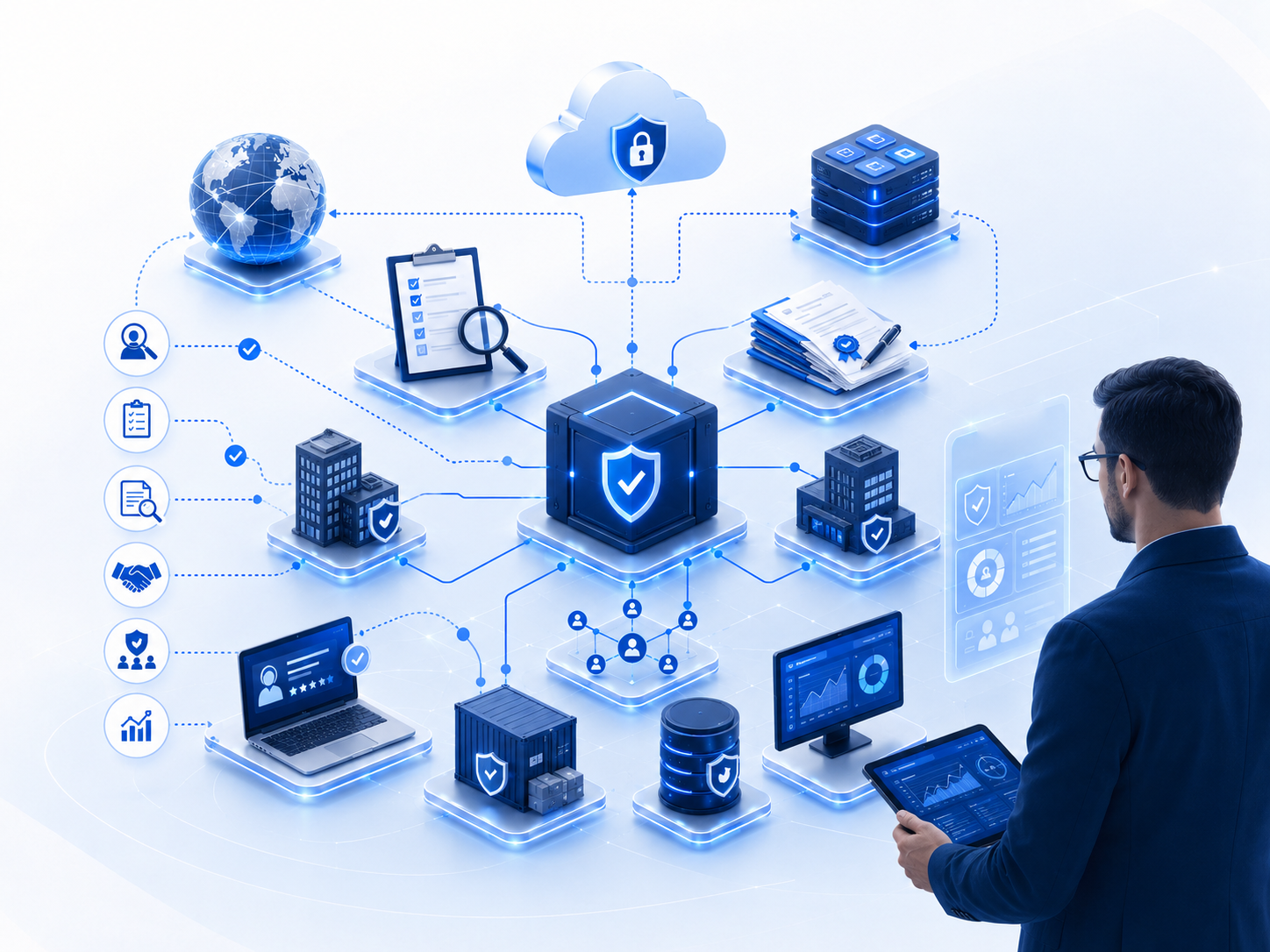
🤝 Vendor Risk Assessments – Evaluate supplier security posture, controls, evidence, incidents, and business impact.
📊 Risk Tiering & Criticality Analysis – Classify vendors by data access, service importance, exposure, and dependency.
📋 Due Diligence & Contract Review – Assess security requirements, responsibilities, assurance terms, and contractual protections.
☁️ Cloud & Technology Supplier Risk – Review hosting providers, SaaS platforms, infrastructure partners, and technology dependencies.
🔗 Supply Chain Dependency Assessment – Identify concentration, fourth-party exposure, single points of failure, and resilience risks.
🔄 Continuous Monitoring & Reporting – Track vendor changes, findings, remediation, incidents, metrics, and executive risk visibility.
Understand your vendor ecosystem, business dependencies, critical suppliers, and regulatory obligations. We define the scope of the assessment by identifying third parties with access to sensitive systems, data, and business-critical operations.
Classify vendors based on business criticality, data sensitivity, system access, regulatory obligations, and overall risk exposure to prioritize assessment efforts.
Assess vendor cybersecurity maturity, governance practices, security controls, compliance posture, and operational resilience through comprehensive risk assessments.
Review the effectiveness of security controls, including identity management, encryption, vulnerability management, incident response, business continuity, and data protection.
Analyze identified risks, evaluate their potential business impact, and prioritize remediation activities based on operational, regulatory, and cybersecurity risk.
Develop practical remediation strategies, strengthen contractual security requirements, improve governance, and reduce vendor-related risks across the supply chain.
Continuously monitor vendor security posture, regulatory compliance, emerging threats, and risk indicators to maintain visibility across the third-party ecosystem.
Continuously improve your Third-Party Risk Management program through governance reviews, reassessments, executive reporting, and evolving security best practices.
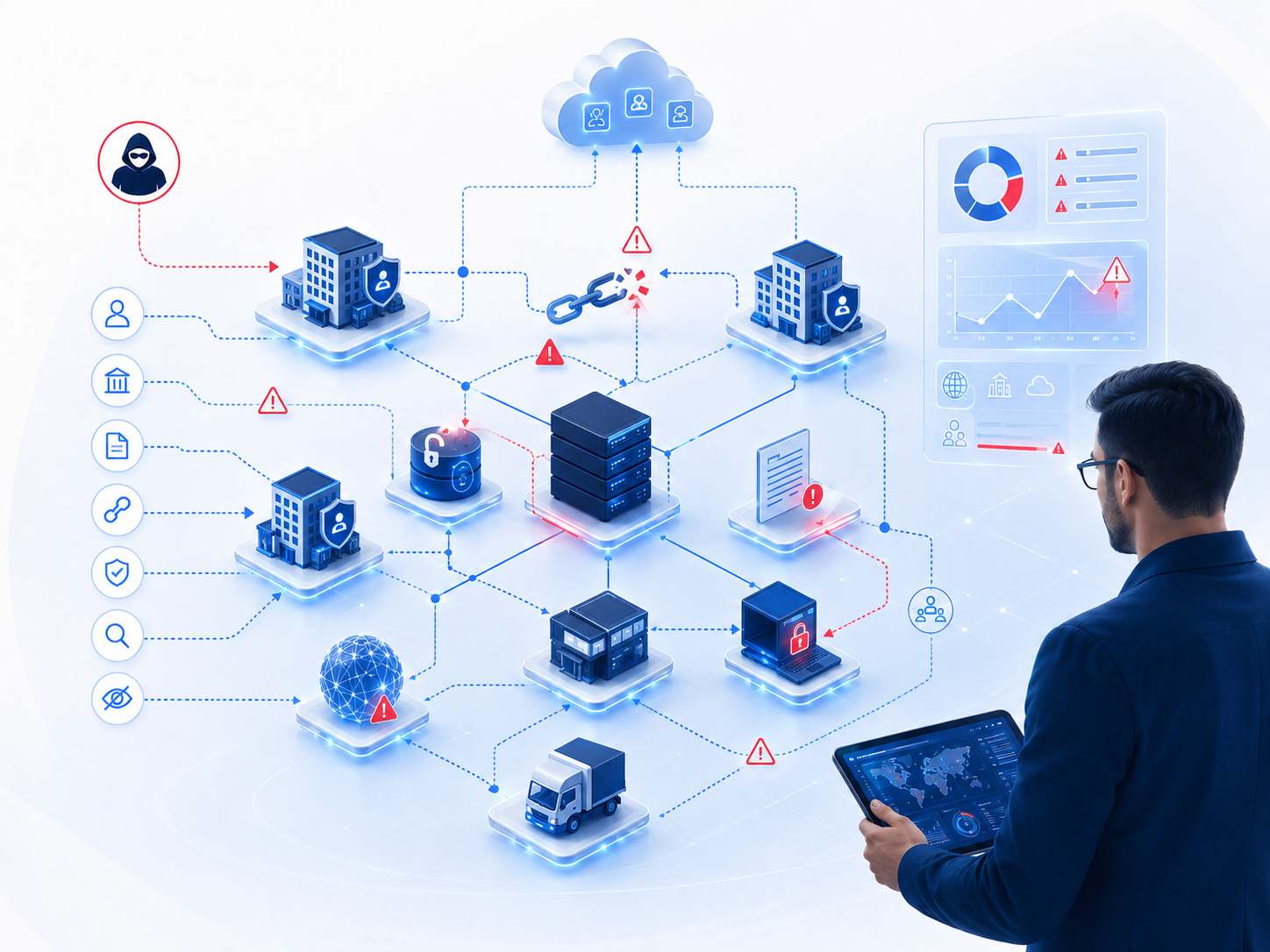
🤝 Weak Vendor Due Diligence – Identify incomplete assessments, inconsistent evidence, poor validation, and weak onboarding controls.
🔐 Data & Access Exposure – Detect excessive access, insecure data handling, weak authentication, and unmanaged privileged connections.
☁️ Cloud & Service Provider Risk – Assess insecure dependencies, configuration exposure, outages, control gaps, and shared responsibilities.
📋 Contractual Control Gaps – Identify weak security clauses, unclear obligations, missing notification terms, and inadequate assurance rights.
🔗 Supply Chain Concentration Risk – Reveal single points of failure, vendor concentration, fourth-party dependencies, and systemic exposure.
🚨 Third-Party Incident Exposure – Evaluate breach notification, response coordination, recovery dependencies, and business-impact risks.
⚖️ Regulatory & Compliance Risk – Identify vendor weaknesses that may affect privacy, security, contractual, or regulatory obligations.
📉 Limited Ongoing Visibility – Replace annual reviews with sustained monitoring, remediation tracking, and continuous risk oversight.
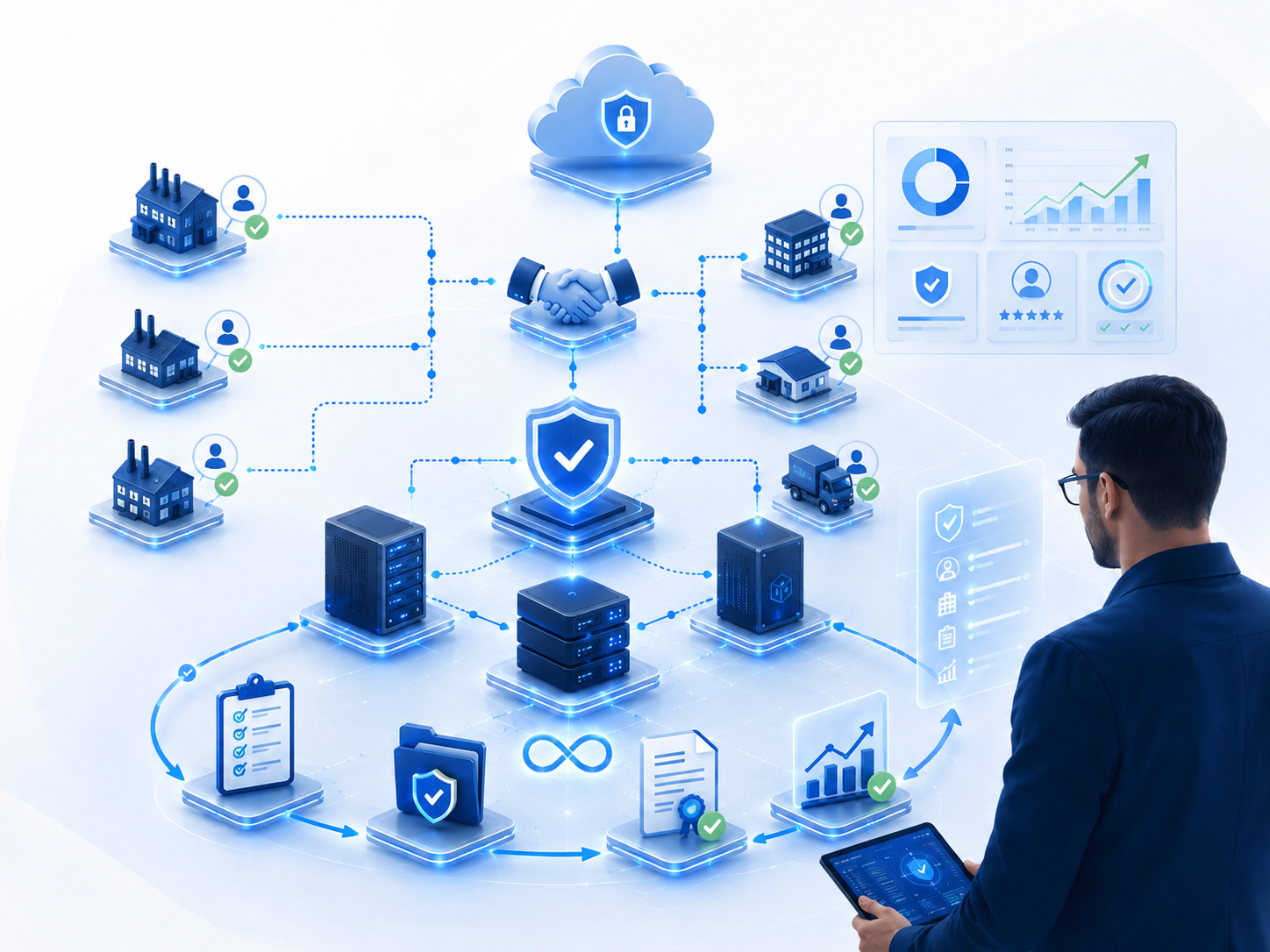
🔍 Clear Third-Party Risk Visibility – Understand which vendors and dependencies create the greatest business exposure.
🎯 Risk-Based Prioritization – Focus resources on vendors with the greatest security and business impact.
🛡️ Comprehensive Vendor Security Reviews – Evaluate technical, operational, and compliance controls.
📋 Framework-Aligned Governance – Support leading security and regulatory frameworks.
📈 Actionable Risk Intelligence – Deliver clear remediation strategies and executive reporting.
🚀 Continuous Risk Management – Build sustainable third-party risk programs that evolve with your business.
Third-Party & Supply Chain Risk Management helps organizations identify, assess, monitor, and mitigate cybersecurity, operational, and compliance risks introduced by vendors, suppliers, contractors, cloud providers, and other external partners.
Third-party vendors often have access to sensitive systems and data, making them a common target for cyberattacks. Effective risk management reduces the likelihood of data breaches, operational disruption, and regulatory non-compliance.
Any organization that relies on external vendors, cloud services, software providers, contractors, or business partners can benefit from a structured third-party risk management program, regardless of industry or size.
Assessments typically evaluate vendor security controls, governance, compliance posture, access management, data protection practices, incident response capabilities, business continuity, and regulatory alignment.
Yes. We align third-party risk assessments with leading frameworks, including ISO/IEC 27001, NIST CSF, PCI DSS, GDPR, HIPAA, SOC 2, and industry-specific regulatory requirements.
Continuous monitoring helps identify changes in vendor security posture, emerging cyber threats, compliance issues, and new risks, enabling organizations to respond proactively before they impact business operations.
CliffGuard combines cybersecurity expertise, governance best practices, and risk-based methodologies to help organizations strengthen vendor oversight, reduce supply chain risk, improve compliance, and build long-term business resilience.
Third-party relationships can introduce significant cybersecurity, operational, and compliance risks. CliffGuard helps organizations identify, assess, and manage vendor risks through risk-based assessments, continuous monitoring, and actionable remediation strategies.
Partner with CliffGuard to strengthen your third-party ecosystem, reduce supply chain risks, and build a more resilient business.
Strengthen your third-party ecosystem with proactive risk management, comprehensive vendor assessments, and continuous security oversight. CliffGuard helps you identify, prioritize, and mitigate third-party and supply chain risks—enabling secure business relationships, stronger compliance, and greater operational resilience.