











From Hunt to Validation
Exposing Hidden Threats
Sophisticated attackers can bypass preventive controls and remain hidden through credential abuse, persistence, defense evasion, lateral movement, and legitimate-tool misuse. Traditional alert-driven monitoring may not reveal adversaries already operating inside enterprise environments.
CliffGuard’s Threat Hunting & Compromise Assessment Services proactively search endpoints, identities, networks, cloud environments, and security telemetry for attacker behavior, indicators of compromise, and evidence of unauthorized access or persistent intrusion.
Threat Hunting proactively searches enterprise telemetry for malicious behaviors that may have bypassed existing security controls, using hypotheses, adversary intelligence, behavioral analytics, and investigative techniques. MITRE’s threat-hunting methodology emphasizes hypotheses, data requirements, analytics, and investigation.
A Compromise Assessment determines whether attackers have established or previously maintained unauthorized presence by examining endpoints, identities, network activity, cloud telemetry, persistence mechanisms, and indicators of compromise. CISA describes threat hunting as proactively searching systems for threats that have bypassed defenses and established a foothold.
CliffGuard combines ATT&CK-informed threat hunting, compromise validation, telemetry analysis, behavioral investigation, and detection improvement to uncover hidden threats and strengthen enterprise security operations.

🎯 Threat-Led Hunt Planning – Develop hypotheses around relevant adversaries, attack paths, TTPs, and critical assets.
🔍 Behavioral Threat Hunting – Hunt persistence, credential abuse, lateral movement, defense evasion, and suspicious activity.
🖥️ Endpoint & Identity Hunting – Analyze processes, accounts, authentication, privileges, sessions, and endpoint telemetry.
☁️ Cloud & Network Hunting – Investigate cloud activity, network connections, access patterns, workloads, and suspicious communications.
🧪 Compromise Assessment – Validate indicators, attacker presence, persistence mechanisms, affected assets, and potential intrusion scope.
Define critical assets, threat priorities, business risks, adversary scenarios, hunt objectives, and investigation boundaries. Review threat intelligence, previous incidents, known exposures, and ATT&CK techniques relevant to the enterprise environment.
Develop threat-hunting hypotheses and identify required endpoint, identity, network, cloud, authentication, and security telemetry. Validate data availability, quality, retention, and visibility before beginning targeted hunting activities.
Search telemetry for behavioral anomalies, persistence, credential abuse, lateral movement, command-and-control, and defense-evasion activity. Correlate evidence across systems to identify suspicious sequences and potential attacker presence.
Investigate suspicious findings, establish timelines, identify affected assets and identities, validate indicators, and determine whether malicious activity represents active, historical, or unconfirmed compromise.
Document hunt findings, confirmed compromise, affected assets, detection gaps, and recommended actions. Convert validated behaviors into improved analytics, response priorities, and future hunt hypotheses.
🥷 Hidden Adversary Presence – Identify attackers operating without triggering existing security alerts.
🔐 Credential Abuse – Detect stolen credentials, suspicious authentication, token misuse, and account compromise.
🔗 Lateral Movement – Identify abnormal access, remote execution, trust abuse, and attacker propagation.
⚙️ Persistence Mechanisms – Detect techniques allowing attackers to maintain unauthorized access across systems.
🛡️ Defense Evasion – Reveal activity designed to bypass controls, telemetry, detections, and analyst visibility.
☁️ Cloud Compromise – Identify suspicious identities, workloads, services, permissions, and cloud activity.
📡 Command-and-Control Activity – Detect suspicious communications, beaconing, remote access, and external connections.
👁️ Detection Blind Spots – Reveal missed behaviors, telemetry gaps, weak analytics, and incomplete threat coverage.
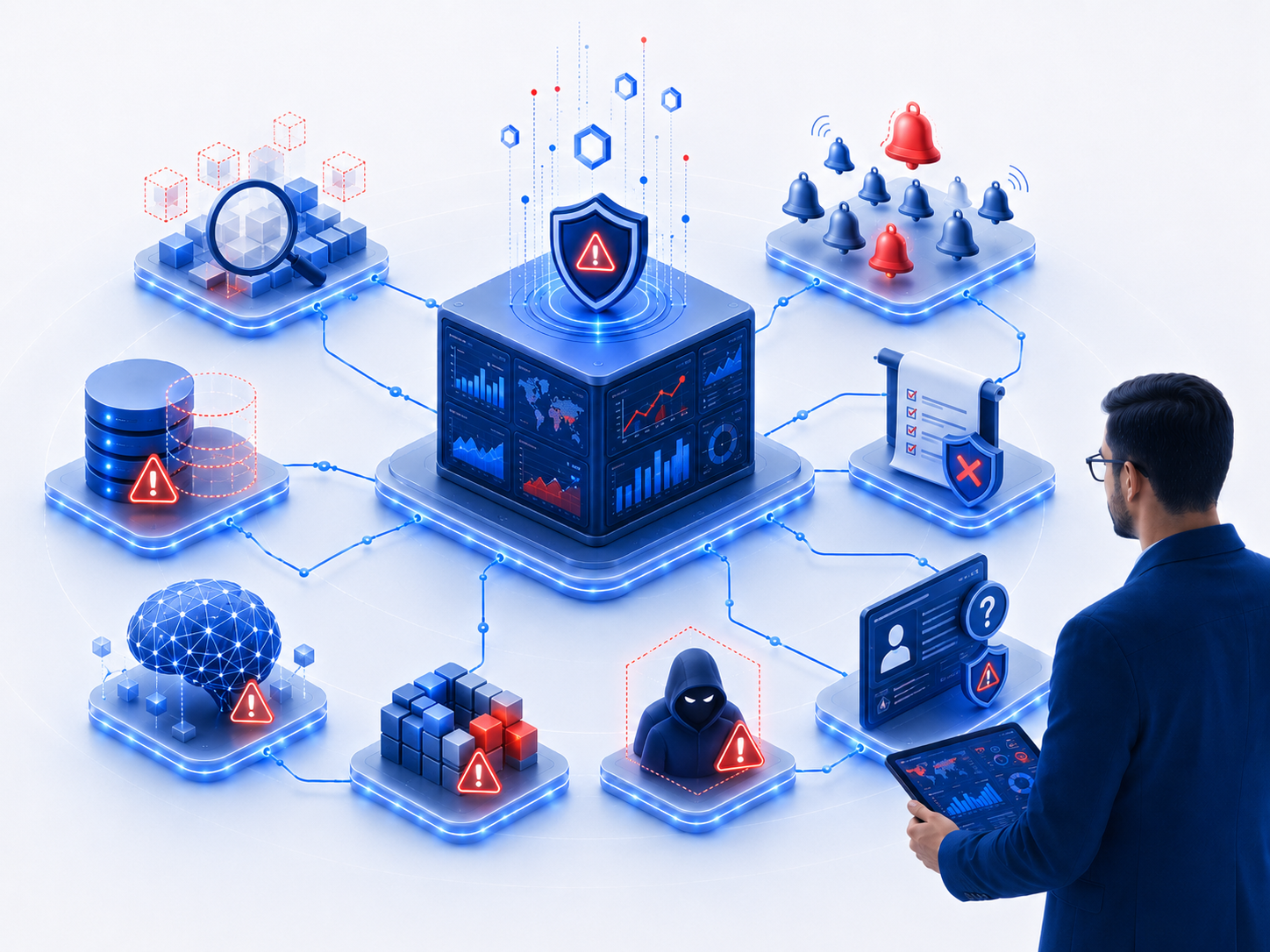

🔍 Greater Threat Visibility – Reveal hidden adversaries, suspicious activity, compromised assets, and attack paths.
⏱️ Reduced Attacker Dwell Time – Identify persistent threats earlier before compromise expands across environments.
🛡️ Validated Security Posture – Confirm whether evidence of active or historical compromise exists.
🎯 Improved Detection Coverage – Convert hunt findings into stronger analytics, alerts, and monitoring capabilities.
🚨 Faster Incident Decisions – Provide evidence for escalation, containment, remediation, and response prioritization.
They proactively search endpoints, identities, networks, cloud environments, and security telemetry for hidden adversaries, suspicious behaviors, and evidence of compromise.
Traditional monitoring responds to configured alerts. Threat hunting proactively searches for attacker behaviors and anomalies that existing detections may have missed.
A compromise assessment evaluates available evidence to determine whether unauthorized attacker activity or persistent footholds exist or previously existed within the assessed environment.
Yes. Hunt hypotheses, adversary behaviors, data requirements, and investigative analytics can be mapped to MITRE ATT&CK tactics and techniques.
Hunting can cover endpoints, identities, Active Directory, networks, cloud platforms, SaaS, security tools, and other available enterprise telemetry.
It is valuable after suspicious activity, major exposure, security-control concerns, threat intelligence, organizational change, or when leadership needs evidence of potential compromise.
Outcomes can include hunt findings, compromise status, affected assets, attack behaviors, detection gaps, remediation priorities, and recommendations for stronger monitoring and response.
CliffGuard combines proactive threat hunting, compromise assessment, behavioral analysis, and ATT&CK-informed investigation to expose hidden adversaries, validate compromise, close detection gaps, and strengthen enterprise defensive readiness.
Move beyond alert-driven security. CliffGuard uncovers suspicious behavior, validates attacker presence, identifies affected assets, and gives security teams the evidence needed to act before hidden threats become major incidents.